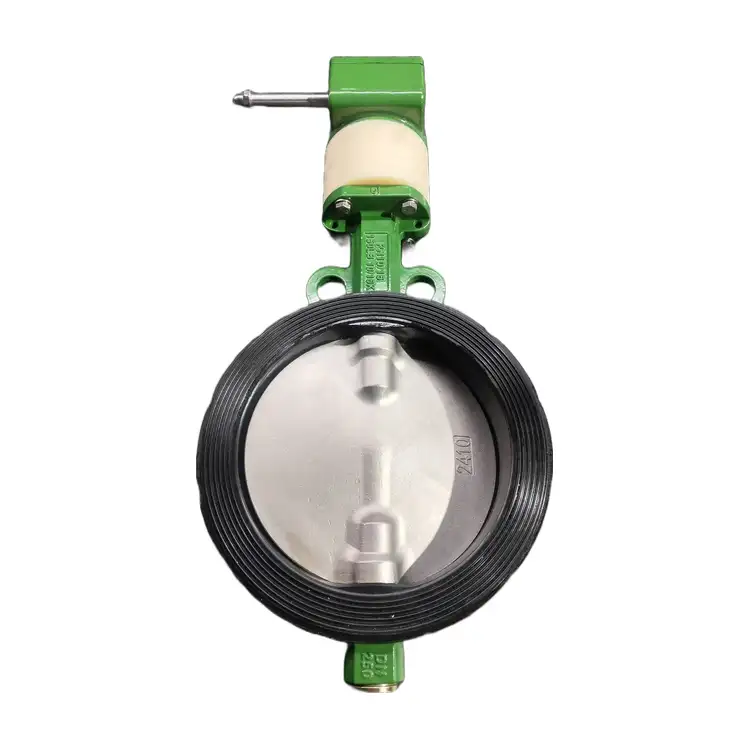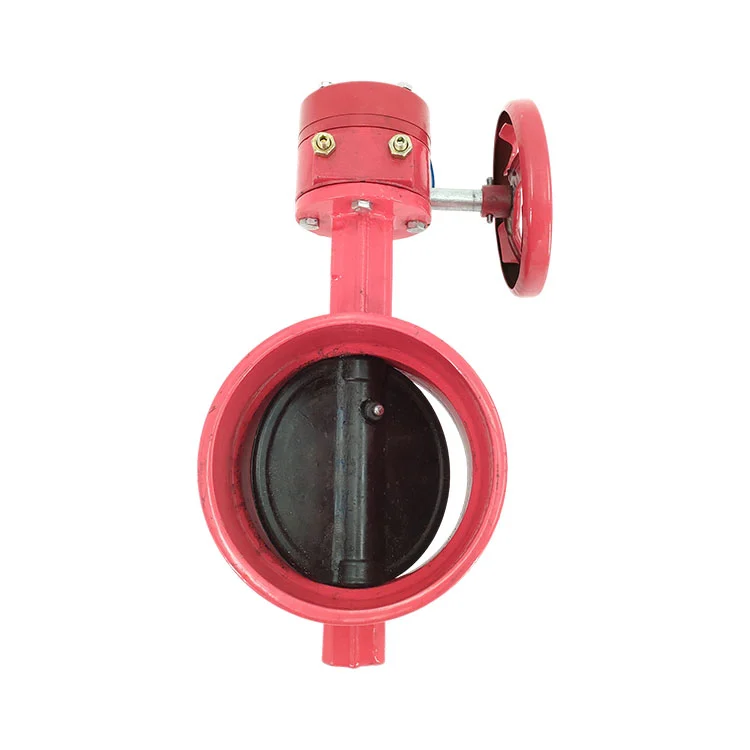
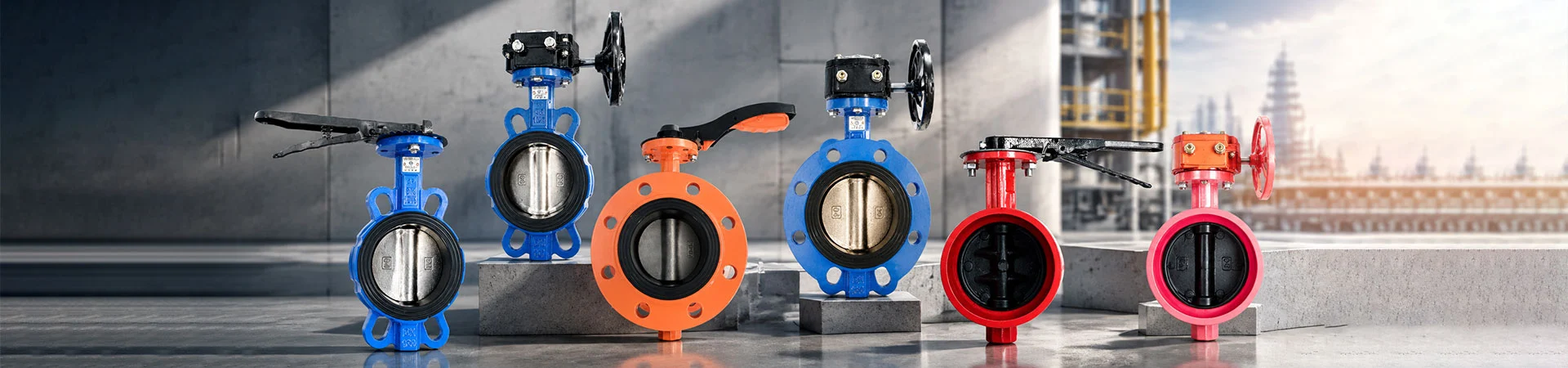
Wholesale Stainless Steel Butterfly Valve for Reliable Flow Control
At Liangfa, we supply stainless steel butterfly valves for pipeline systems where corrosion resistance, material compatibility, and dependable flow control are important. These valves are used in water treatment, food processing, chemical handling, pharmaceutical utilities, and other applications when the selected materials meet the operating requirements.
Choose the Right Stainless Steel Grade
Not all stainless steel grades offer the same corrosion resistance or mechanical properties. The correct choice depends on the fluid composition, chloride concentration, temperature, cleaning chemicals, and other site conditions. When selecting a stainless steel butterfly valve, we recommend reviewing the full operating environment rather than choosing a grade based on its name alone.
| Material Option | Typical Selection Considerations |
|---|---|
| SS304 | Commonly considered for general water service, food-related equipment, and environments with moderate corrosion demands. |
| SS316 | Often considered where improved resistance to certain corrosive media and chloride exposure is needed compared with SS304. |
| Duplex or higher-alloy stainless steel | May be considered for more demanding corrosion or strength requirements, subject to the specific grade and service conditions. |
These are general selection guidelines, not guarantees of suitability. Actual performance depends on the exact grade, fluid chemistry, temperature, stress conditions, and manufacturing quality. We recommend sharing the medium and operating parameters with us before confirming the material specification.
Review the Complete Wetted Parts
The body is only one part of the valve that contacts or is exposed to the process medium. The disc, stem, seat, and other internal components also affect corrosion resistance, sealing performance, and service life.
- Body and disc: Confirm the stainless steel grade and compatibility with the fluid.
- Stem: Check strength, corrosion resistance, and compatibility with the disc and operating mechanism.
- Seat: Select a sealing material that suits the medium, temperature, and required shut-off performance.
- Fasteners and accessories: Consider the installation environment and potential exposure to moisture or chemicals.
For a stainless steel butterfly valve, combining a corrosion-resistant body with an unsuitable seat or stem may still lead to premature failure. We therefore recommend checking the complete bill of materials instead of evaluating the body material alone.
Match the Valve to the Fluid
Different fluids create different material challenges. Clean water, saline solutions, acidic chemicals, oils, and cleaning agents should not be treated as equivalent services. Temperature changes and the presence of suspended particles can also affect the suitability of the disc and seat.
| Service Condition | What Buyers Should Check |
|---|---|
| Water and wastewater | Water chemistry, disinfectants, suspended solids, and operating temperature. |
| Food processing | Material suitability, cleaning procedures, surface requirements, and applicable hygiene standards. |
| Chemical handling | Exact chemical composition, concentration, temperature, and exposure duration. |
| High-chloride environments | Risk of pitting and crevice corrosion, including around joints and sealing areas. |
| Frequent cleaning cycles | Compatibility with cleaning agents, temperature changes, and repeated operation. |
We encourage buyers to provide the exact medium and concentration whenever possible. A generic description such as “corrosive liquid” may not provide enough information to select a safe and durable valve configuration.
Consider Hygiene and Cleaning Needs
For food, beverage, pharmaceutical, and other hygiene-sensitive applications, stainless steel construction alone does not establish that a valve is suitable for sanitary service. Buyers should also review surface finish, internal geometry, drainage requirements, seat material, cleanability, and the standards applicable to the project.
If the pipeline uses clean-in-place procedures or frequent chemical washing, please tell us the cleaning agents, temperatures, and cycle frequency. We can then help review the available materials and configuration against those conditions. Any required sanitary certification or compliance documentation should be confirmed for the specific model.
Check the Pipeline Connection
Connection design affects installation, maintenance, and compatibility with the existing pipeline. Depending on the product range, butterfly valves may be available in wafer, lug, flanged, or other connection configurations. Each type has different installation requirements.
- Wafer connection: Installed between compatible pipeline flanges.
- Lug connection: Uses threaded lugs for the specified bolting arrangement and piping design.
- Flanged connection: Uses integral flange ends to connect with matching pipeline flanges.
Before ordering, confirm the nominal diameter, flange standard, pressure rating, face-to-face dimensions, and available installation space. We recommend checking the project drawings, particularly when replacing an existing valve, because matching the pipe diameter alone does not ensure dimensional compatibility.
Plan for Service Life and Maintenance
Stainless steel can provide good corrosion resistance when correctly selected, but it does not eliminate every maintenance requirement. Deposits, unsuitable cleaning chemicals, chloride exposure, damaged seats, and poor installation can still affect performance.
During routine inspections, check for external corrosion, leakage, unusual operating resistance, loose fasteners, and deterioration of sealing components. In demanding chemical or hygiene-sensitive service, establish an inspection schedule based on the process conditions and the valve manufacturer's recommendations.
When evaluating a stainless steel butterfly valve, buyers should consider total service costs as well as the initial purchase price. Correct material selection, compatible sealing components, and accessible installation can help reduce unplanned replacement and maintenance work.
Send Us Your Application Details
To help us recommend a suitable configuration, please provide Liangfa with the following information:
- Pipe size, connection type, and pressure rating
- Process medium and chemical concentration
- Normal and maximum operating temperatures
- Required stainless steel grade for body, disc, and stem
- Seat material and shut-off requirements
- Operating method: manual, pneumatic, or electric
- Cleaning procedure and any hygiene-related requirements
- Applicable standards, inspection requirements, and documentation
As a high-tech enterprise, Liangfa provides product information and technical support to help customers compare material and configuration options. With clear operating data, we can assess the requirements more accurately and help reduce the risk of material mismatch during procurement.
Frequently Asked Questions
Is SS316 always better than SS304?
No. SS316 generally offers better resistance to certain corrosive environments, but it is not suitable for every chemical or operating condition. The right grade depends on the exact medium, concentration, temperature, and exposure conditions. We recommend selecting the material based on the application rather than grade alone.
Can stainless steel prevent all forms of corrosion?
No. Stainless steel can still experience pitting, crevice corrosion, or other forms of attack in unsuitable environments. Chlorides, stagnant deposits, cleaning chemicals, and temperature can all affect performance. Confirm the fluid chemistry and service conditions before finalizing the material.
Does a stainless steel valve automatically meet sanitary requirements?
No. Sanitary suitability also depends on surface finish, internal design, sealing materials, cleanability, manufacturing controls, and applicable certifications. If the valve is intended for food or pharmaceutical service, specify the required hygiene standards and documentation at the quotation stage.
How do I choose a seat material for a chemical pipeline?
Start with the exact chemical composition, concentration, operating temperature, and cleaning conditions. Different elastomers and polymer seats have different compatibility limits. We recommend checking the seat manufacturer's compatibility data before selecting the final configuration.
What details are most important when requesting a replacement valve?
Provide the existing valve's size, connection dimensions, pressure rating, material grade, seat specification, and operating method. Photos of the nameplate and available drawings can help us compare the proposed replacement with the existing installation.
- View as
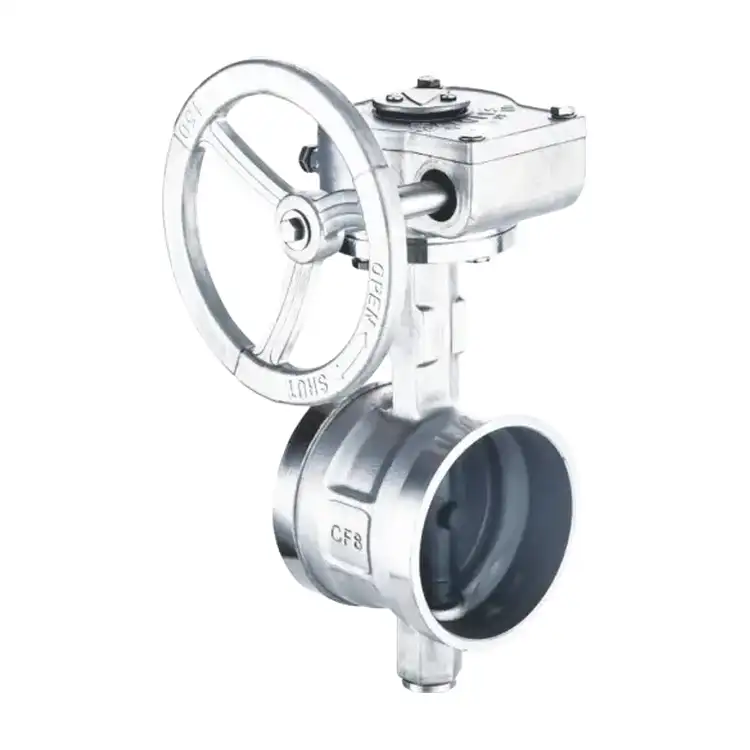
Stainless Steel Worm Gear Grooved Butterfly Valve
Liangfa’s Stainless Steel Worm Gear Grooved Butterfly Valve is designed for reliable shut-off control in water supply, HVAC, wastewater treatment, and selected industrial piping systems. Featuring a manual worm gear operator and a quick-install grooved connection, it helps simplify pipeline assembly, operation, and maintenance. We offer multiple body, disc, stem, and seat material options, including SS304, SS316, EPDM, NBR, PTFE, and FKM, to suit different media and operating conditions.
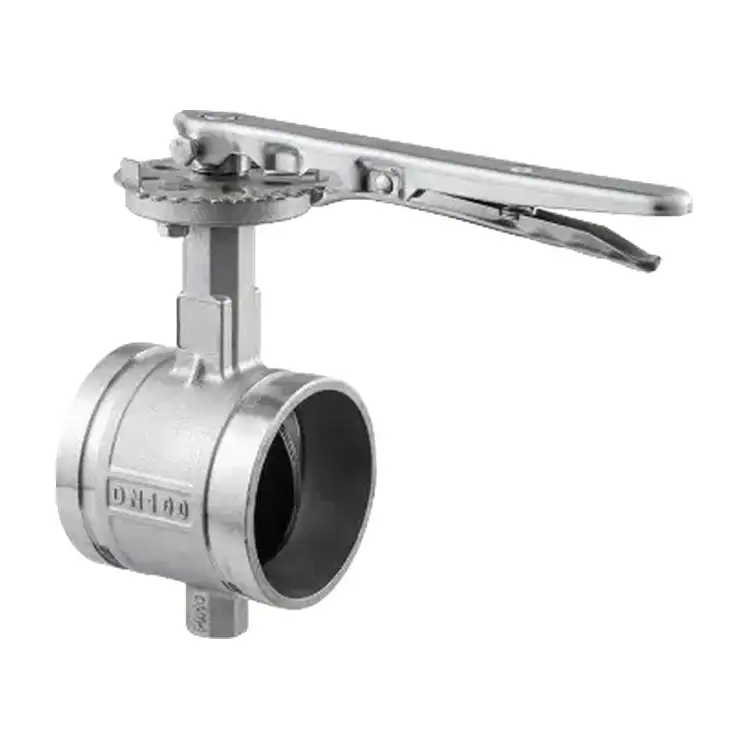
Stainless Steel Manual Grooved Butterfly Valve
Liangfa’s Stainless Steel Manual Grooved Butterfly Valve is designed for reliable shut-off control in water supply, fire-protection systems, HVAC, wastewater treatment, and selected industrial pipelines. Featuring a manual lever handle, a soft-seated sealing structure, and a quick-install grooved connection, it offers convenient operation and simplified maintenance.
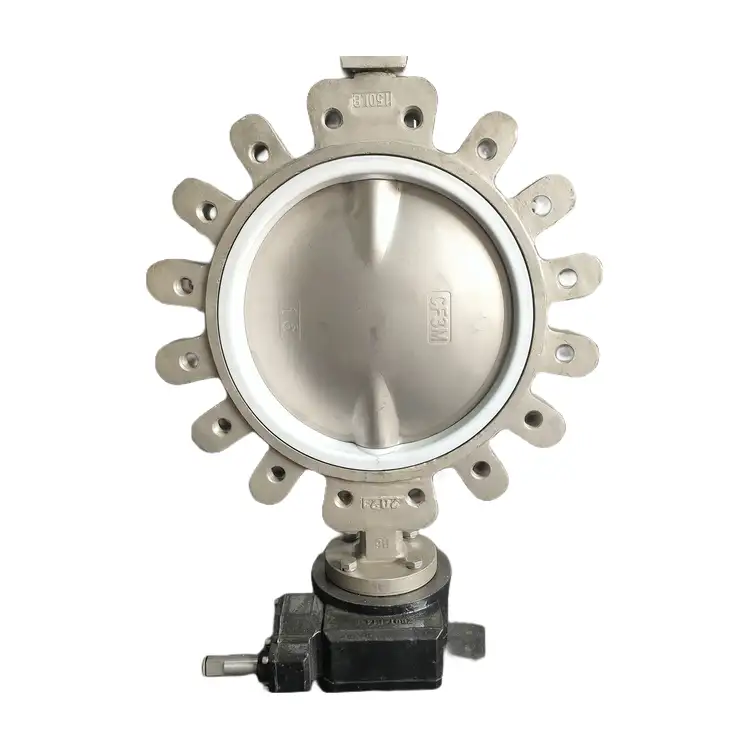
Stainless Steel Worm Gear Lug Butterfly Valve
Liangfa’s Stainless Steel Worm Gear Lug Butterfly Valve is designed for reliable pipeline shut-off and flow control in water treatment, HVAC, wastewater management, chemical processing, and other industrial applications. Its worm-gear drive reduces manual operating effort and supports stable valve positioning, while the lug-type connection facilitates installation and maintenance in suitable pipeline layouts.
Stainless Steel Lever Lug Butterfly Valve
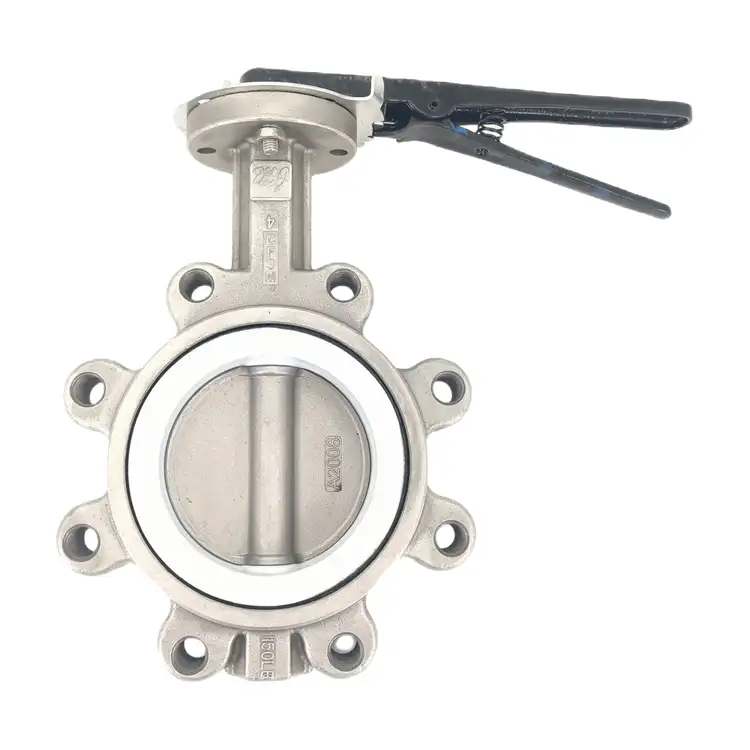
Liangfa’s Stainless Steel Lever Lug Butterfly Valve is designed for quick manual shut-off and reliable flow control in industrial pipeline systems. Featuring a 90-degree lever operation and a lug-style connection, it offers convenient handling and flexible installation options for compatible piping layouts. We provide multiple body, disc, stem, and seat material choices, including SS304, SS316, EPDM, NBR, PTFE, and FKM, to meet different fluid compatibility and operating requirements.
Stainless Steel Worm Gear Flanged Butterfly Valve
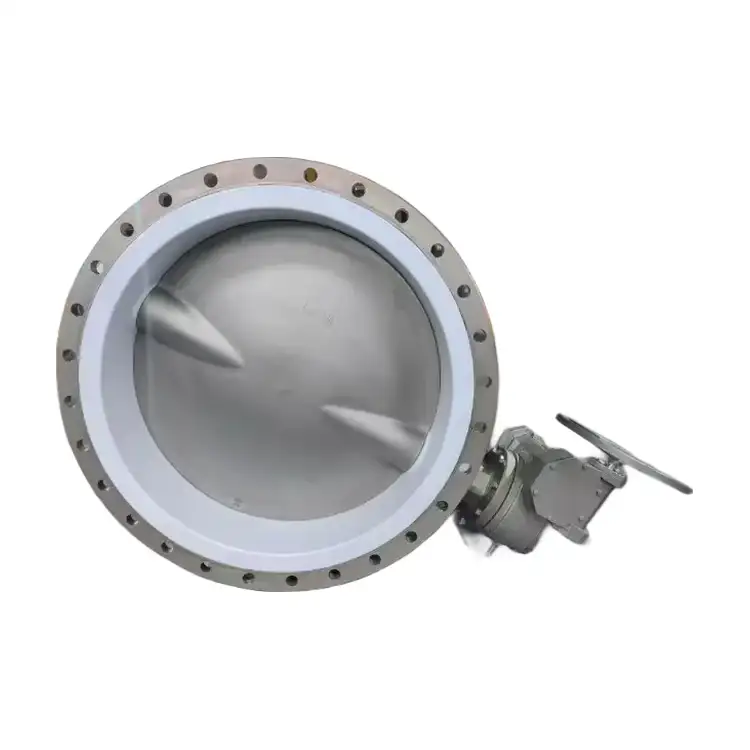
Liangfa’s Stainless Steel Worm Gear Flanged Butterfly Valve is designed for industrial pipelines requiring reliable shut-off and convenient manual operation. Its worm gear mechanism helps reduce operating effort and maintain controlled disc positioning, while multiple body, disc, stem, and seat material options support different water, oil, and compatible chemical applications.
Stainless Steel Lever Flanged Butterfly Valve
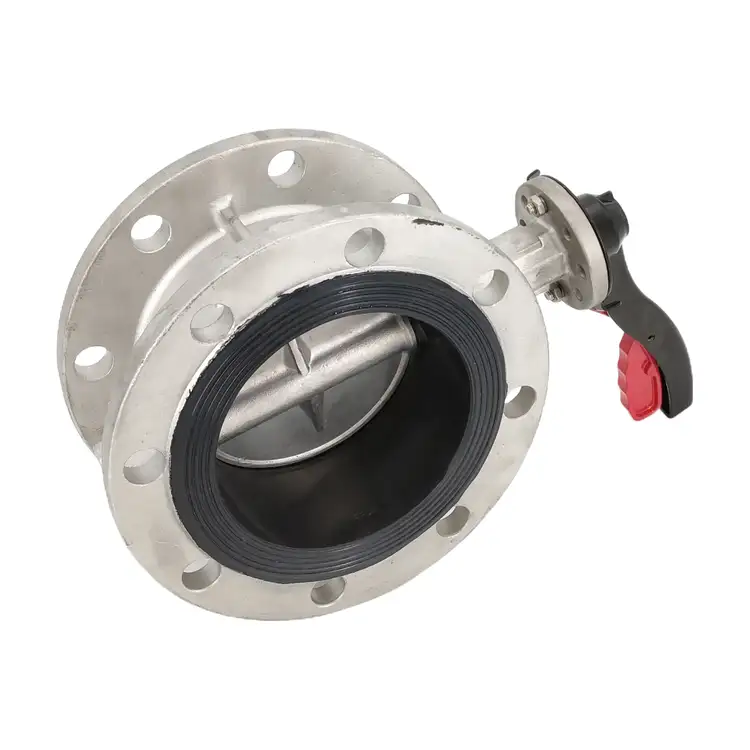
Liangfa’s Stainless Steel Lever Flanged Butterfly Valve is designed for manual pipeline shut-off and flow adjustment in water treatment, HVAC, chemical processing, and other industrial systems. Featuring a 90-degree lever mechanism and a concentric soft-seal design, it offers convenient operation without an external power supply.
Liangfa is a professional Stainless Steel Butterfly Valve manufacturer and supplier in China. We have an experienced sales team, professional technicians, and an after-sales service team.
News Recommendations