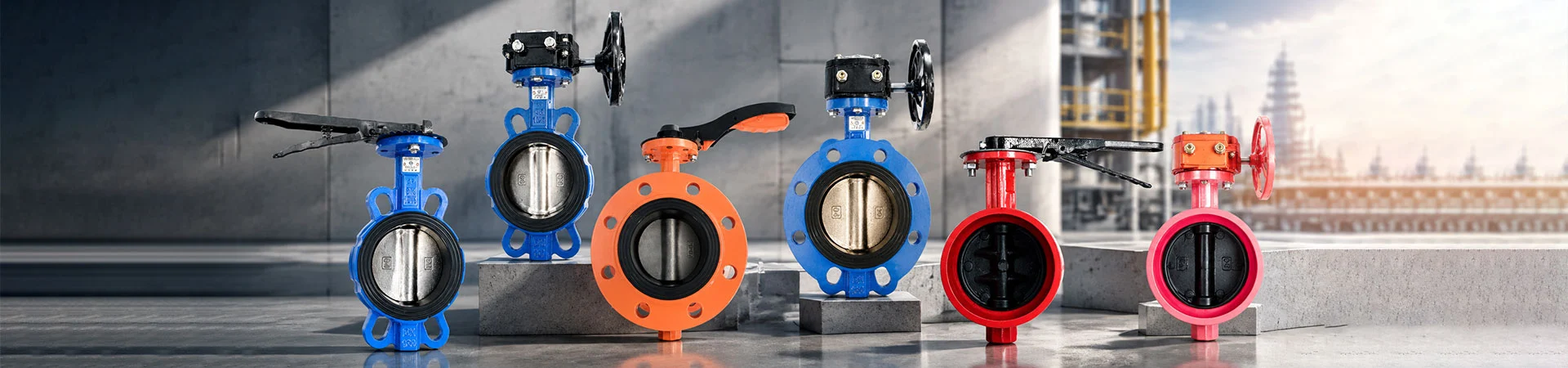
Check Valve Manufacturer for Dependable Industrial Flow Control
Preventing reverse flow is essential for protecting pumps, pipelines, and other process equipment. At Liangfa, we help customers select check valves according to flow direction, installation position, operating pressure, medium characteristics, and the risk of water hammer. As a high-tech enterprise, we provide technical support to help buyers compare valve structures and identify suitable options for water supply, wastewater treatment, HVAC, and industrial pipeline systems.
How Reverse Flow Is Controlled
A check valve allows fluid to move in the intended direction and closes when the flow reverses or the forward-flow force becomes insufficient, depending on its design. Unlike an isolation valve, it generally operates automatically without a separate manual or powered control command.
Choosing the right Check Valve requires an understanding of the system's flow conditions. A valve that closes too slowly may allow reverse flow, while sudden closure can contribute to pressure surges. We recommend considering pump characteristics, flow velocity, pipeline layout, and operating cycles before confirming a model.
Compare Common Designs
Different internal mechanisms respond differently to changes in flow. We help customers compare the following common designs based on the application and installation requirements.
Swing Type
A swing check valve uses a hinged disc that opens with forward flow and returns toward the seat when flow decreases or reverses. It is commonly considered for water pipelines and other services where the installation arrangement and flow conditions suit its movement. Buyers should check the permitted mounting orientation and closure characteristics.
Lift Type
A lift check valve uses a guided disc or piston that moves away from the seat under forward pressure and returns when the pressure condition changes. Its suitability depends on the design, fluid properties, pressure conditions, and installation orientation. Confirm the manufacturer's requirements before using this type in a specific pipeline.
Dual Plate Type
A dual plate check valve uses two spring-assisted plates that open under forward flow and return toward the closed position when flow reverses. Its compact construction can be useful where installation space and valve weight are important considerations. Buyers should verify the pressure rating, flange compatibility, and flow characteristics.
Silent Type
A silent check valve is designed to close with reduced impact under suitable operating conditions. It may be considered for pump discharge lines and systems where pressure surges or valve noise are concerns. Actual performance depends on the internal design, sizing, flow velocity, and system dynamics.
Reduce Water Hammer Risk
Water hammer occurs when fluid velocity changes rapidly, creating a pressure wave in the pipeline. Check valve closure behavior can affect the severity of this transient, particularly in pump systems and long pipelines.
To help reduce the risk, we recommend reviewing the pump start-stop sequence, flow velocity, pipeline length, elevation changes, and potential reverse-flow conditions. A spring-assisted or non-slam design may be appropriate in some applications, but no valve can eliminate every source of water hammer. System-level analysis may be needed for critical installations.
- Confirm the expected flow rate and normal operating pressure.
- Review whether the pump starts and stops frequently.
- Identify the risk of reverse flow during a power failure or pump shutdown.
- Consider the valve's closing response and the system's transient pressure behavior.
- Check whether additional surge-control equipment is required.
Choose Materials for the Fluid
The valve body, disc, spring, shaft, and sealing components must be compatible with the medium and operating conditions. We recommend evaluating corrosion resistance, temperature limits, suspended solids, and maintenance requirements together rather than selecting materials based on price alone.
| Component | Common Options | What to Consider |
|---|---|---|
| Body | Cast iron, ductile iron, carbon steel, stainless steel | Working pressure, corrosion exposure, and structural requirements |
| Disc | Ductile iron, carbon steel, stainless steel | Fluid compatibility, strength, and wear conditions |
| Spring and shaft | Material depends on the valve design | Corrosion resistance, fatigue, and operating cycle |
| Seat and seals | Elastomers or other materials according to model | Medium compatibility, temperature, and required sealing performance |
For wastewater or fluid containing suspended particles, buyers should check whether the internal structure can tolerate the expected solids. For corrosive media, confirm the compatibility of every wetted component, not just the valve body.
Where Check Valves Are Used
Pump Discharge Lines
Check valves help prevent reverse flow toward a pump after shutdown. The selected design should match the pump's operating characteristics and the potential for pressure surges.
Water Supply and Drainage
In municipal and building water systems, check valves can help maintain the intended flow direction and protect upstream equipment. Selection should account for water quality, pressure fluctuations, and local installation requirements.
HVAC and Cooling Systems
Circulating-water networks may use check valves to prevent unwanted reverse flow between pumps or branches. Buyers should review flow rates, pressure losses, and the system's operating sequence.
Industrial Process Pipelines
Check valves can be used in compatible liquid and gas services where reverse flow must be restricted. The design, materials, pressure rating, and applicable standards must be verified for the specific process medium.
Installation Checks
Correct installation is essential for reliable operation. Before fitting the valve, check the flow-direction arrow, connection dimensions, pressure rating, and required orientation. Some designs depend on gravity or spring action and may not be suitable for every mounting position.
- Clean the pipeline and remove construction debris before installation.
- Confirm that the valve matches the pipeline connection standard.
- Provide enough space for inspection and future maintenance.
- Avoid installing the valve where turbulence or nearby fittings conflict with the manufacturer's recommendations.
- Follow the specified bolt-tightening sequence and gasket requirements.
After installation, inspect the connections for leakage and verify operation under the intended conditions. If abnormal noise, repeated impact, or reverse flow occurs, review the valve sizing, installation position, flow conditions, and closure characteristics.
What We Need for Selection
To help us recommend a suitable configuration, please provide the following information when requesting a quotation:
- Nominal diameter and pipeline connection type
- Working pressure and temperature
- Medium composition and any suspended solids
- Normal flow rate and possible reverse-flow conditions
- Horizontal or vertical installation requirements
- Pump model or system operating sequence, where applicable
- Required material grades and project standards
We use these details to review the application and help reduce the risk of selecting a valve that does not match the system. Final specifications should be confirmed against the approved technical datasheet and installation requirements.
Liangfa's Technical Support
At Liangfa, we help customers evaluate check valve structures, connection requirements, material compatibility, and operating conditions for different pipeline projects. As a high-tech enterprise, we support technical communication during product selection so buyers can assess the available options against their system requirements.
When contacting us, share your pipeline drawings, operating data, and target specifications where available. This information helps us review the application and confirm which product configuration is appropriate.
Frequently Asked Questions
Does a check valve completely prevent leakage?
Not necessarily. The achievable sealing performance depends on the valve design, seat condition, medium, pressure differential, and product specification. If a specific leakage class is required, confirm it with the manufacturer before ordering.
Can I install a check valve vertically?
Some designs support vertical installation, while others require a particular flow direction or mounting orientation. Check the manufacturer's instructions for the selected model and ensure the installation position supports reliable closure.
How do I choose a valve for a pump outlet?
Consider the pump's flow rate, discharge pressure, shutdown behavior, potential reverse flow, and water hammer risk. The valve's closure response and pressure loss should be reviewed alongside the pump and pipeline design.
Why does a check valve make knocking noises?
Possible causes include rapid disc closure, excessive flow velocity, incorrect sizing, unstable flow, or unsuitable installation. Review the system conditions and valve design before deciding whether a different model or a surge-control measure is needed.
Does a check valve need regular maintenance?
Maintenance frequency depends on the medium, operating cycles, and service conditions. Periodic inspection can help identify debris buildup, seat wear, corrosion, spring damage, or restricted disc movement. Follow the manufacturer's maintenance guidance for the specific valve.
- View as
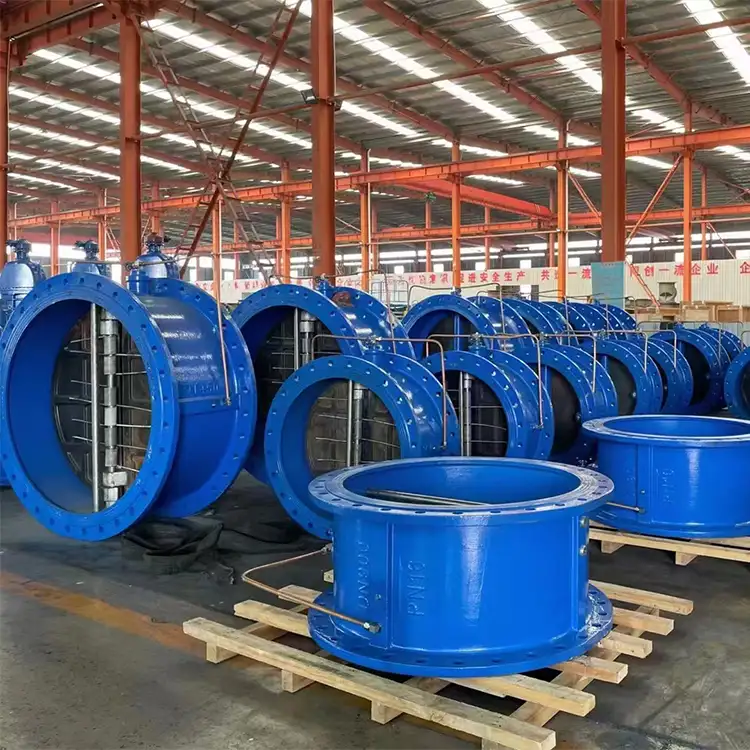
Slow Close Check Valve
Liangfa supplies Slow Close Check Valve designed to prevent backflow, reduce water hammer, and protect pumps and pipelines during shutdown. Available in DN40–DN1200 with wafer connections, multiple pressure ratings, and optional body and sealing materials, our valves are suitable for municipal water supply, fire protection, HVAC circulation, and industrial water systems.
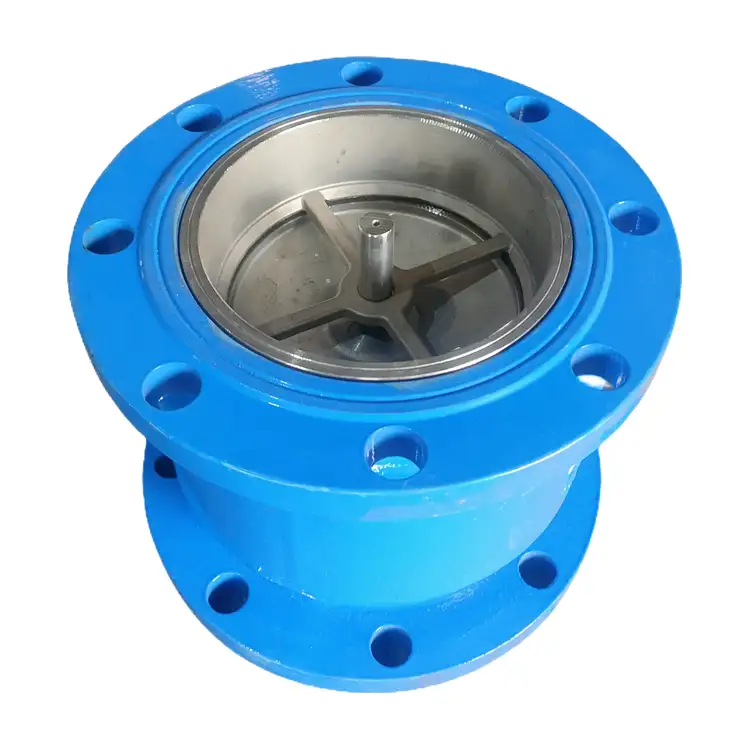
Silent Check Valve
Our Silent Check Valve is designed to prevent reverse flow in water supply and circulation systems while helping reduce water hammer and operating noise when pumps stop. At Liangfa, we provide check valve solutions for municipal water supply, high-rise buildings, HVAC systems, fire protection, and industrial water circulation.
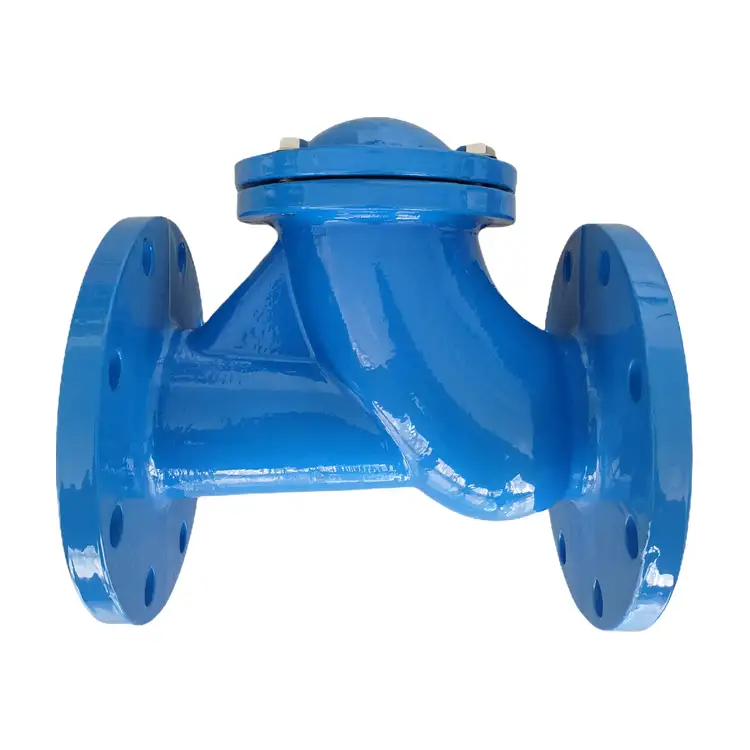
Ball Check Valve
At Liangfa, we provide reliable ball check valve solutions for water supply networks, sewage treatment plants, pump stations, and industrial water circulation systems. Featuring a rolling rubber-coated ball, our valves help prevent backflow, reduce closing noise, and handle suitable fluids containing sediment or fibers. We offer multiple body materials, sealing options, and pressure ratings to meet different pipeline requirements.
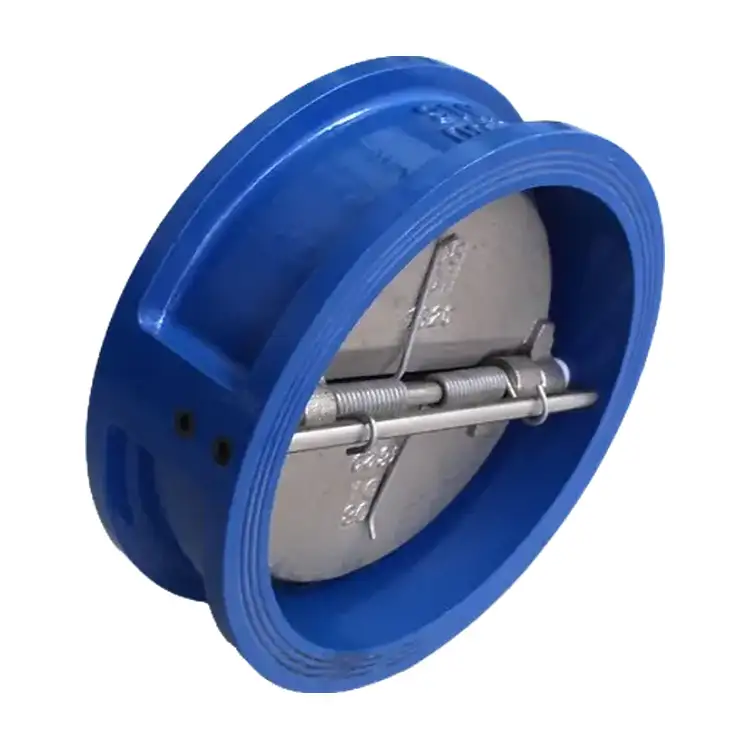
Butterfly Type Check Valve
Our Butterfly Type Check Valve is a compact, dual-disc wafer valve designed to prevent reverse flow and protect pumps, pipelines, and downstream equipment. Available with cast iron, ductile iron, carbon steel, and stainless steel body options, it supports different pressure classes and sealing materials for water supply, HVAC, fire protection, and industrial circulation systems.
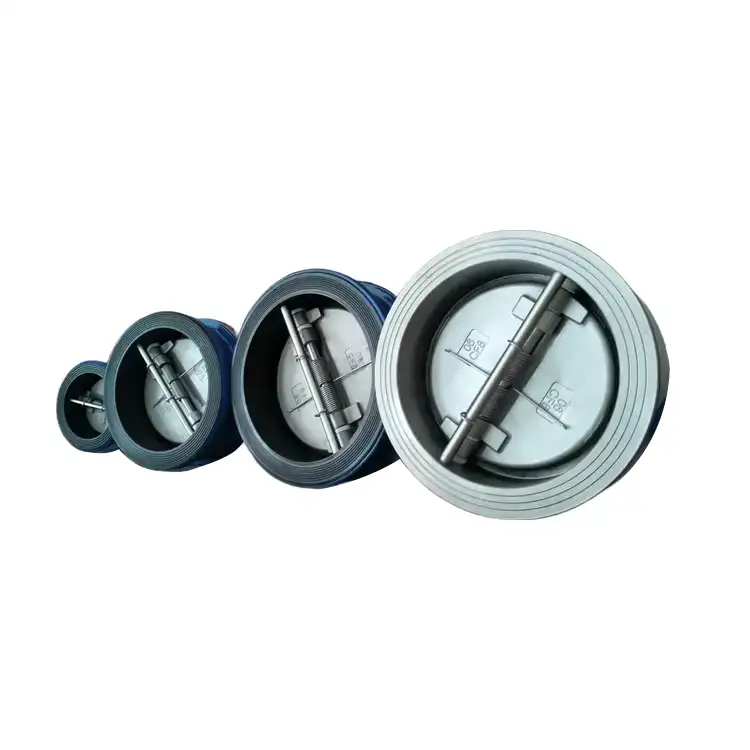
Wafer Check Valve
Liangfa supplies wafer check valves designed to prevent reverse flow in water supply, fire protection, HVAC, and selected industrial pipeline systems. Available in compact wafer-style configurations with ductile iron, carbon steel, and stainless steel body options, our valves offer different disc structures and sealing materials to meet specific pressure, temperature, and media requirements.
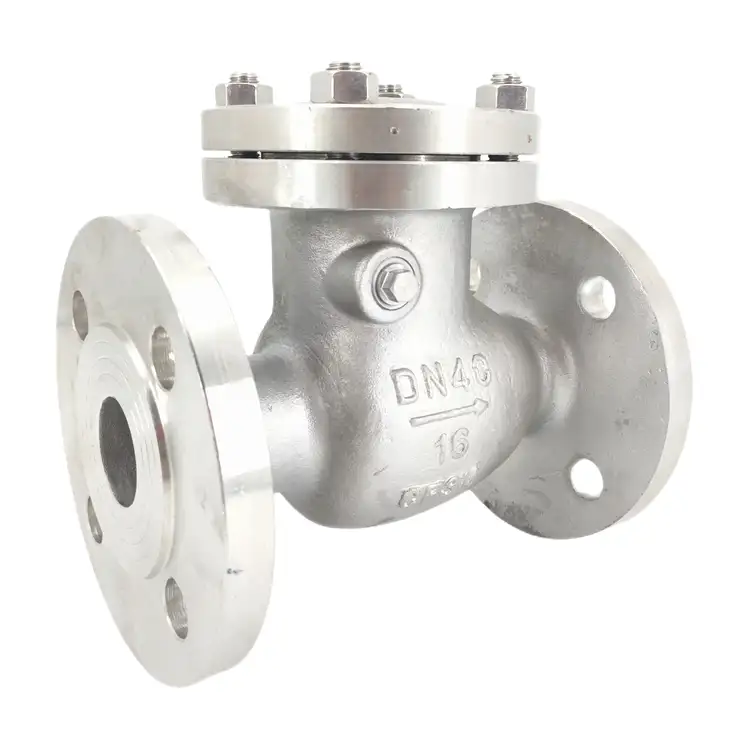
Swing Check Valve
Liangfa supplies swing check valves designed to help prevent reverse flow and protect pumps and pipeline equipment. Available with ductile iron, carbon steel, and stainless steel bodies, our valves support different sealing materials and pressure ratings for water supply, HVAC, pump stations, and selected industrial applications.
Liangfa is a professional Check Valve manufacturer and supplier in China. We have an experienced sales team, professional technicians, and an after-sales service team.
News Recommendations