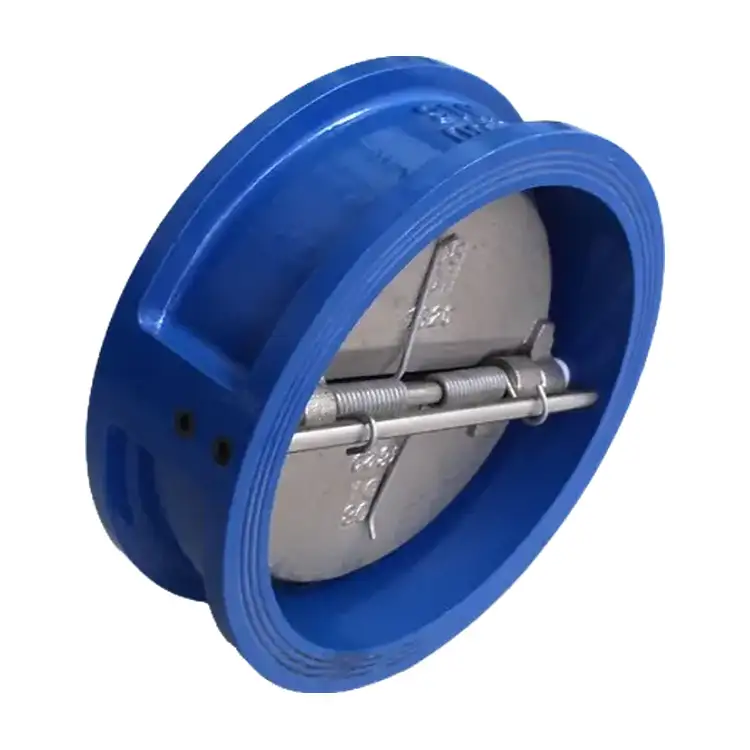
Butterfly Type Check Valve
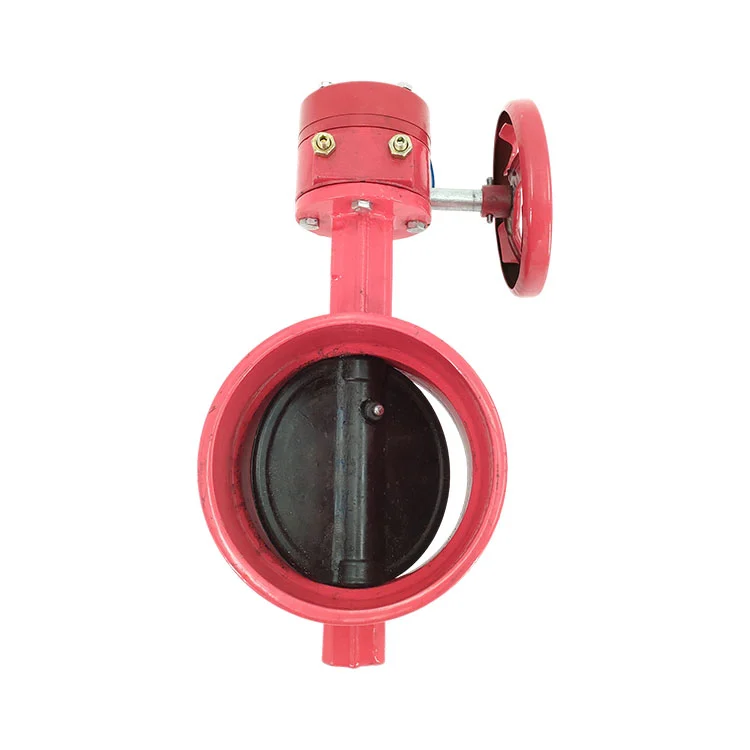
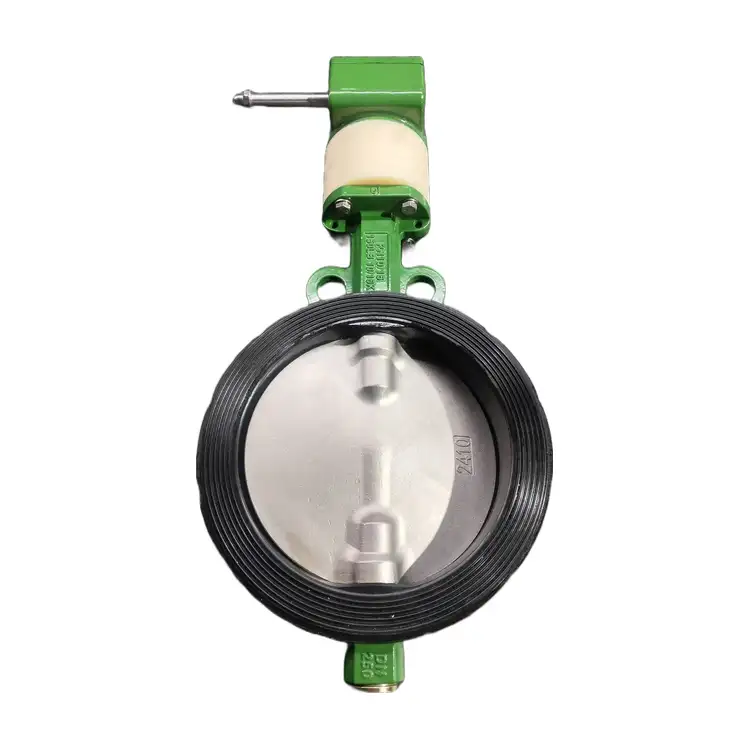
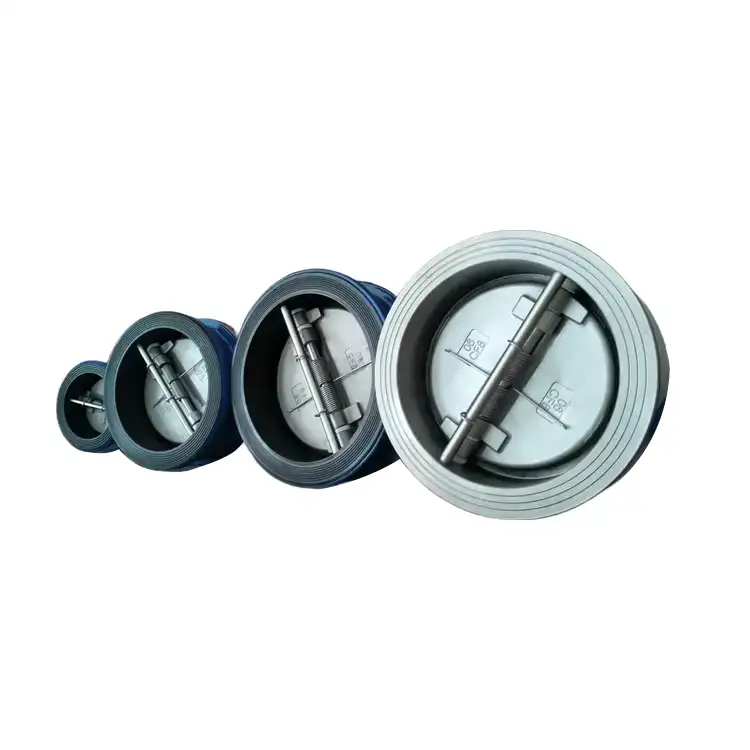
Our Butterfly Type Check Valve is a compact, dual-disc wafer valve designed to prevent reverse flow and protect pumps, pipelines, and downstream equipment. Available with cast iron, ductile iron, carbon steel, and stainless steel body options, it supports different pressure classes and sealing materials for water supply, HVAC, fire protection, and industrial circulation systems.
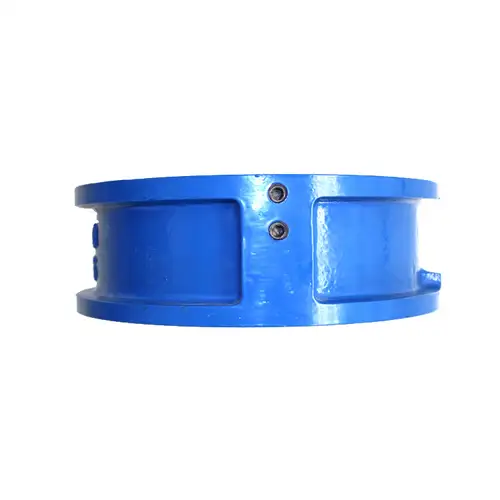
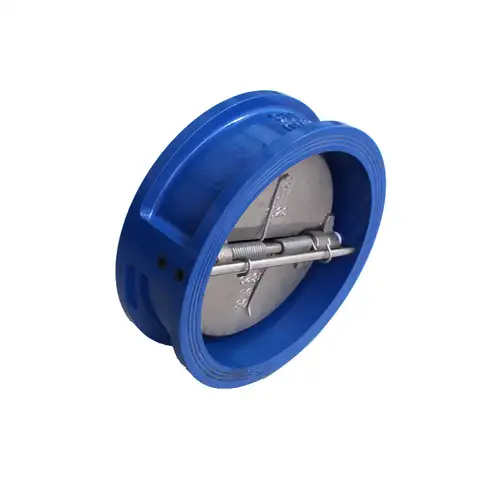
At Liangfa, we supply butterfly type check valves for water distribution, HVAC circulation, fire protection, and industrial piping systems. Our DH77X-10/16Q model uses a compact wafer body, two butterfly discs, and spring-assisted closing to help prevent reverse flow while reducing installation space. We offer different body, disc, and sealing materials to suit specified fluid conditions.
Compact Design for Tight Pipework
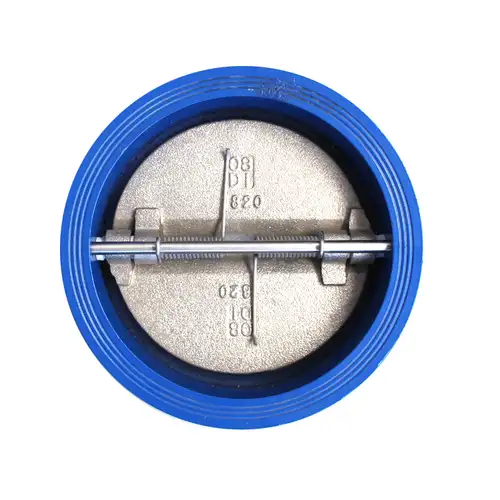
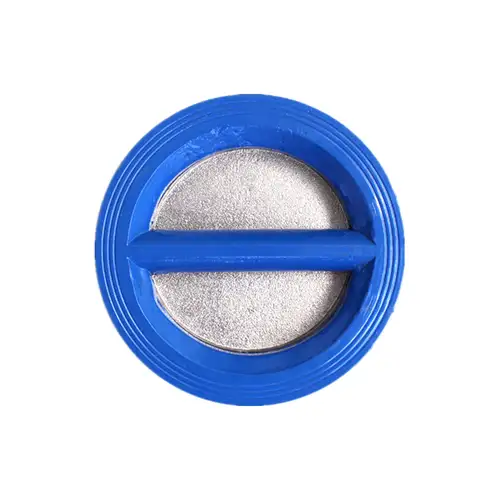
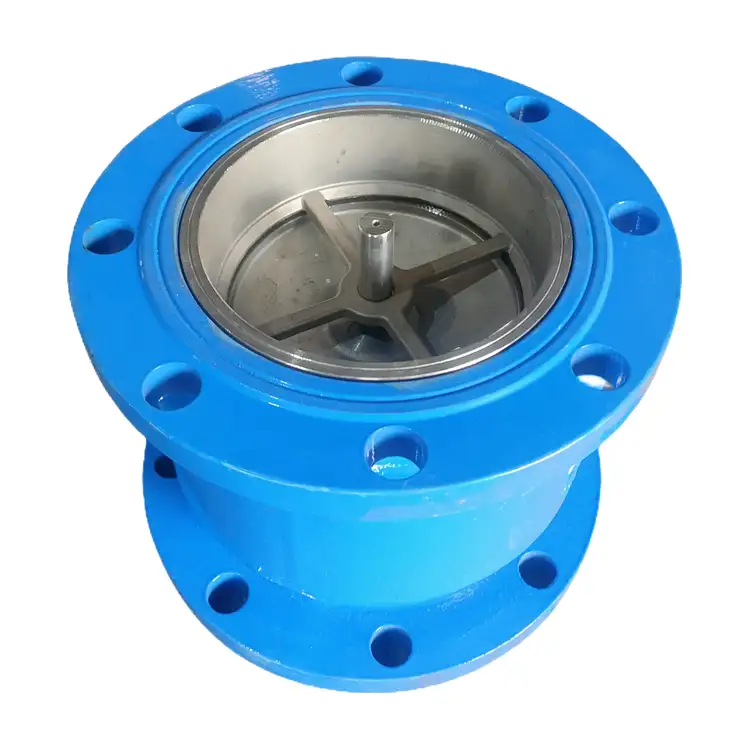
The DH77X-10/16Q is a dual-disc wafer check valve designed to control flow automatically without an external actuator. During forward flow, the medium pushes the two discs open against the spring force. When the flow decreases or reverses, the springs help return the discs toward the seat, while reverse pressure assists closure.
The short face-to-face design makes this valve useful where installation space is limited, such as pump rooms, mechanical equipment rooms, and existing pipeline upgrades. Its spring-assisted discs respond to changes in flow, and the soft-seal configuration helps achieve reliable shutoff under suitable operating conditions.
A standard dual-disc check valve is not a dedicated water-hammer control device. For pump outlets with significant surge pressure, long-distance water transmission, or high-head systems, we recommend evaluating the complete pipeline and considering a suitable slow-closing valve where required.
Technical Specifications
| Product Name | Butterfly Type Check Valve |
| Model | DH77X-10/16Q |
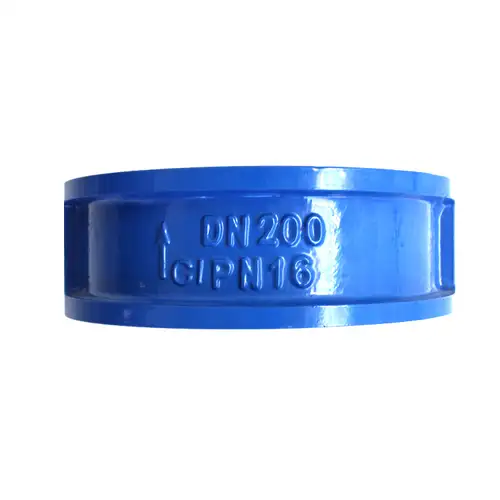
| Nominal Diameter | DN40–DN1200; confirm the available range for the selected model |
| Connection | Wafer |
| Working Pressure Options | PN10, PN16, 150LB, 5K, 10K, 16K; confirm the applicable standard and rating |
| Listed Temperature Range | -10°C to 100°C; the permitted range depends on the selected seal and operating conditions |
| Coating | Fusion-bonded epoxy coating in accordance with ANSI/AWWA C550 |
| Operating Principle | Forward-flow opening and spring-assisted automatic closing |
| Structure | Dual-disc wafer check valve |
Material Options for Service Conditions
Choosing the correct material is important for corrosion resistance, sealing performance, and service life. We recommend confirming the medium composition, operating temperature, pressure, and cleaning conditions before specifying the final configuration.
| Component | Available Materials | Selection Considerations |
| Body | Cast iron, ductile iron, WCB, SS304, SS316 | Ductile iron is commonly used in water systems. Stainless steel may be considered for more corrosive environments. |
| Disc | Ductile iron, SS304, SS316, SS2507, SS1.4529 | Material selection depends on corrosion exposure and mechanical requirements. |
| Stem | 410SS, SS304, SS316, SS2507, SS1.4529 | Confirm the applicable construction and material grade for the selected model. |
| Seat Liner | EPDM, NBR, PTFE, FKM (Viton) | Select according to fluid compatibility, temperature, and pressure. |
| Lever | Ductile iron, SS304 | Confirm availability according to the valve configuration. |
| Fasteners | Galvanized carbon steel, SS304, SS316 | Choose based on corrosion exposure and project specifications. |
| Spring | Confirm the specified spring material with the supplier | Spring material and fatigue resistance should suit the fluid and operating cycle. |
How to Select the Right Configuration
Check the Pressure Rating
The butterfly type check valve pressure class must meet or exceed the maximum design pressure of the pipeline, including foreseeable pressure surges. PN10 and PN16 are common choices for water applications, but the correct selection depends on system design. Class 150 and JIS pressure classes are not automatically interchangeable with PN ratings. We recommend confirming the applicable connection and pressure standards before ordering.
Match the Nominal Diameter
The nominal diameter should be selected according to the pipeline size, design flow, and allowable pressure loss. A valve that is too small can increase resistance, while an oversized valve may not operate as intended under low-flow conditions. For large-diameter pump systems, flow velocity and pump-stop transients should be assessed before selecting a standard dual-disc design.
Choose a Compatible Seal
EPDM is commonly used for compatible water applications, while NBR may be suitable for certain oil-containing media. FKM and PTFE may be considered for selected chemical or temperature requirements, subject to the complete valve design. No seal material is suitable for every fluid, so buyers should provide the chemical composition and actual operating temperature when requesting a quotation.
Confirm the Installation Direction
The valve is generally installed in a horizontal pipeline or a vertical pipeline with upward flow, subject to the manufacturer's instructions for the selected model. Follow the flow arrow on the body and verify that the installed orientation allows the discs to open and close correctly. Do not assume that vertical downward-flow installation is suitable.
Applications and Limitations
Water Supply and Building Services
In municipal water distribution, secondary water supply, and building services, a dual-disc check valve helps prevent reverse flow while occupying less space than many longer-body designs. Pressure rating, water quality, and the required shutoff performance should be confirmed for the installation.
HVAC Circulation
Chilled-water and heating-water systems often require compact valves with reliable automatic operation. The selected body and seal materials must be compatible with the circulating fluid and its temperature range. For prolonged hot-water service, confirm the permitted temperature of the complete assembly rather than relying on the seal material's nominal limit alone.
Fire Protection Systems
Check valves may be used in compatible fire-water piping to control reverse flow. The valve's pressure class, applicable approvals, installation requirements, and suitability for the project specification should be verified before purchase. Where pump-stop water hammer is a concern, the system may require a dedicated surge-control solution.
Industrial Cooling Water
For industrial circulation systems, material selection should take account of water chemistry, suspended solids, temperature, and the frequency of pump start-stop cycles. Stainless steel discs and suitable body materials may be considered where corrosion is a concern.
Wastewater and Impurity-Containing Fluids
Dual-disc valves may be unsuitable for wastewater containing long fibers, heavy sludge, or large solid particles because debris can obstruct the discs or sealing surfaces. For these applications, we recommend reviewing the solids content and considering a valve design intended for the actual wastewater conditions.
Seawater and Saline Water
For coastal or chloride-containing water, corrosion resistance must be evaluated for all wetted components, including the body, discs, spring, and fasteners. SS316 is not suitable for every seawater environment, and higher-alloy materials may be needed depending on chloride concentration, temperature, and exposure. We recommend a material compatibility review before finalizing the order.
Standard Valve or Slow-Closing Design?
A standard dual-disc check valve is intended primarily for automatic backflow prevention. Its spring-assisted closing can provide a fast response, but rapid closure may contribute to water hammer in some pipeline systems. A slow-closing check valve uses a different closing arrangement to help manage transient pressure.
| Comparison Item | DH77X Dual-Disc Wafer Type | Slow-Closing Check Valve |
| Main Function | Automatic one-way flow control | One-way flow control with a controlled closing sequence |
| Structure | Two discs with spring-assisted return | Design varies; may include a damping mechanism |
| Installation | Compact wafer connection | Depends on model, often requiring additional installation space |
| Typical Consideration | General water and circulation lines | Pump outlets or pipelines with a significant water-hammer risk |
| Maintenance | Inspect discs, springs, seals, and connections | May require additional inspection of the damping mechanism |
The appropriate option depends on pump characteristics, pipeline length, elevation changes, flow velocity, and transient-pressure calculations. We recommend assessing the whole system instead of choosing a valve based only on nominal diameter.
Installation and Maintenance
Before Installation
Check the model, nominal diameter, pressure rating, materials, and flow-direction marking against the purchase specification. Inspect the body, discs, springs, sealing surfaces, and connection faces for visible damage. Clean the pipeline to remove welding slag, rust, and other debris that could interfere with disc movement.
During Installation
Position the valve centrally between the mating flanges and use a compatible gasket. Tighten the bolts evenly in a diagonal sequence according to the applicable installation procedure. Do not force misaligned pipelines into position using the valve bolts. Complete nearby welding before installing the valve wherever possible to avoid heat damage to seals and coatings.
Commissioning Checks
Pressurize the system gradually and check for external leakage. During forward flow, verify that the valve opens without unusual vibration or noise. After flow stops, check that the valve closes and prevents unacceptable reverse flow. If the system experiences repeated impact, disc chatter, or pressure surges, investigate flow conditions and system design rather than assuming the valve alone can eliminate water hammer.
Routine Inspection
Inspection frequency should reflect fluid cleanliness, operating cycles, and service conditions. Check for leakage, unusual noise, corrosion, and impaired disc movement. Before opening the valve for maintenance, isolate the pipeline, release pressure, drain the medium, and follow the site's lockout procedures. Replace worn seals or damaged components with compatible parts.
Common Operating Problems
| Symptom | Possible Cause | Recommended Action |
| Reverse leakage | Debris on the seat, damaged seal, or impaired disc movement | Isolate the line, inspect the sealing surfaces, and clean or replace damaged parts. |
| Disc fails to open fully | Debris, unsuitable flow conditions, or spring mismatch | Check the flow conditions and inspect the discs and springs. |
| Unusual vibration or noise | Turbulent flow, excessive velocity, or unstable operating conditions | Review flow velocity, upstream piping, and system operation. |
| Flange leakage | Damaged gasket, uneven bolt loading, or flange misalignment | Depressurize the system and inspect the gasket and flange assembly. |
| Corrosion or premature wear | Material incompatibility or unsuitable operating conditions | Review the fluid chemistry and select compatible materials. |
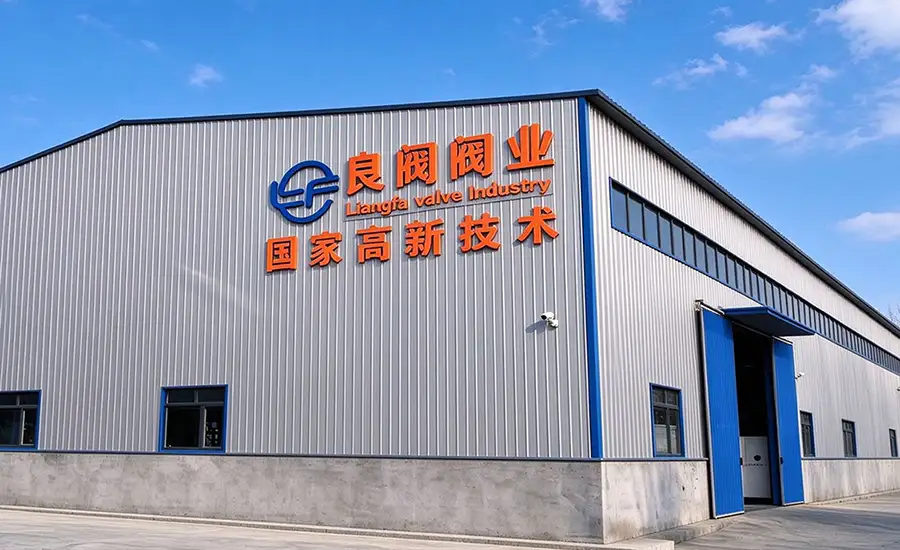
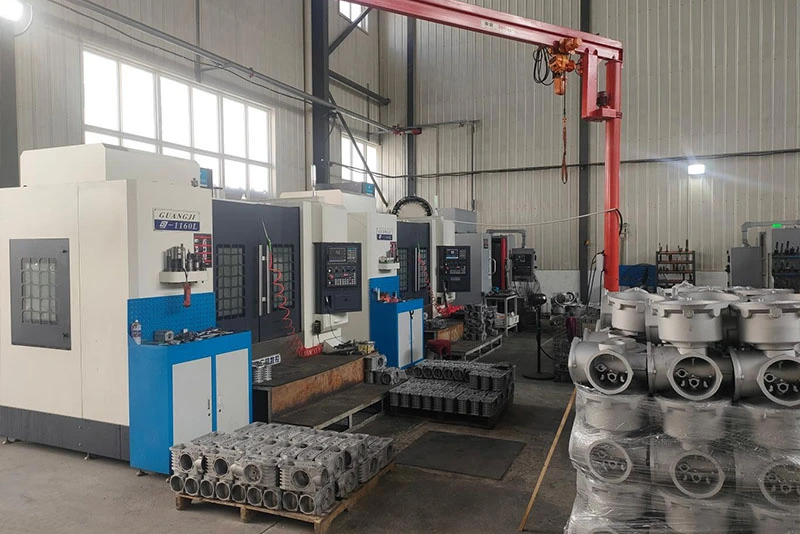
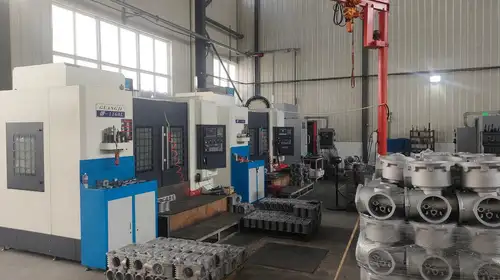
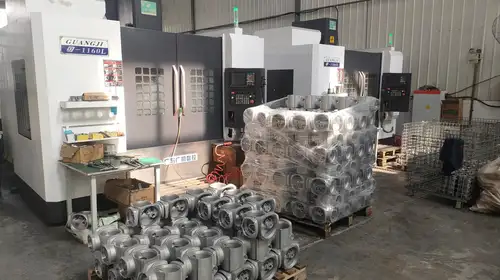
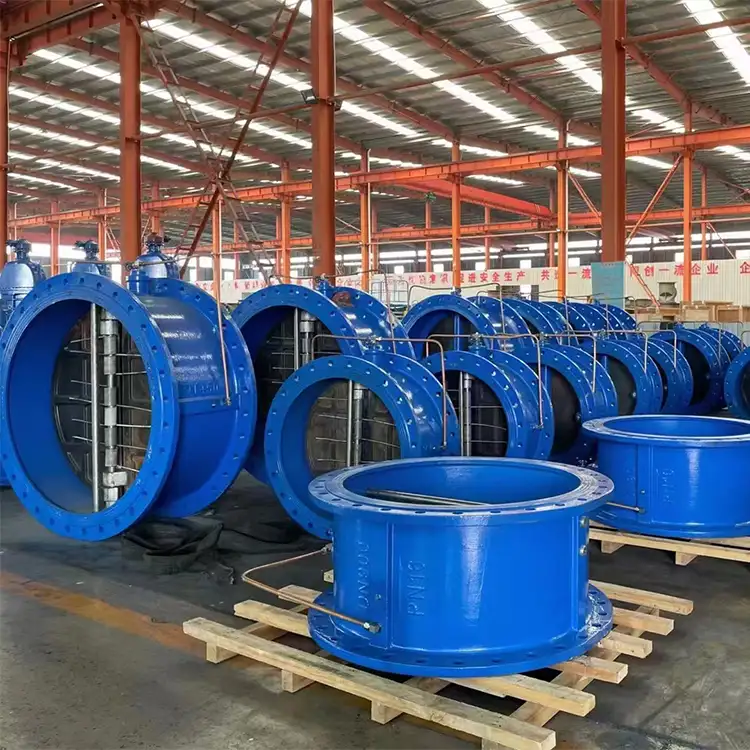
Factory Tour
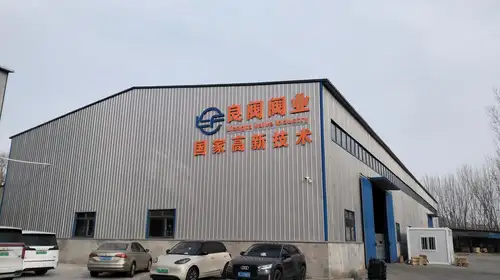
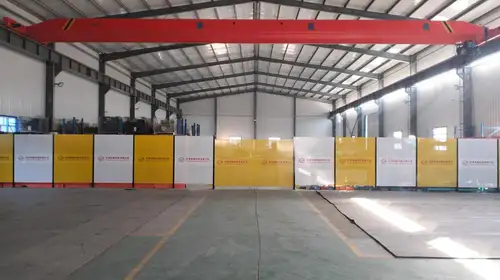
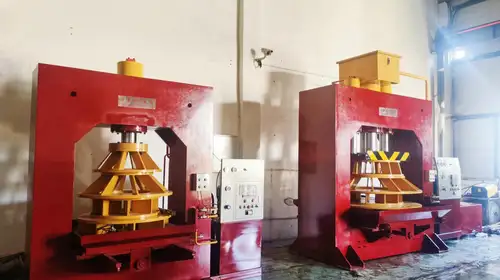
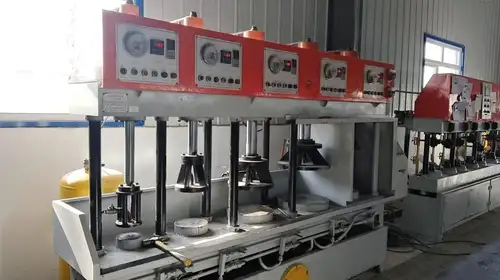
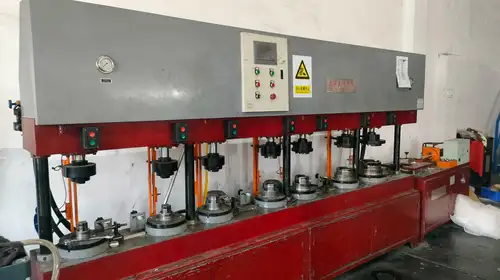
Explore the following factory images to learn more about our manufacturing environment and product handling.

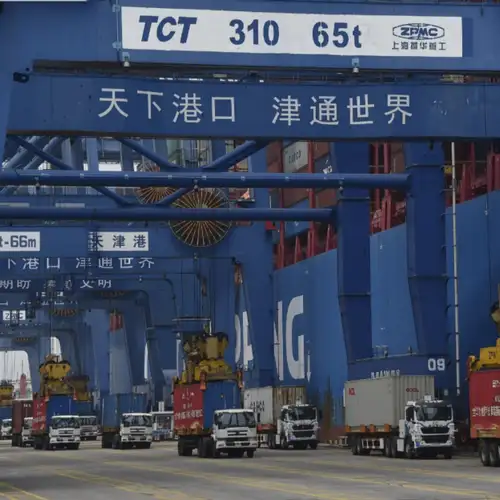
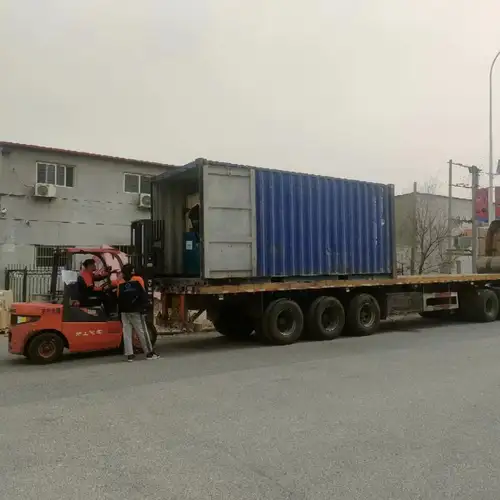
Packing and Shipping
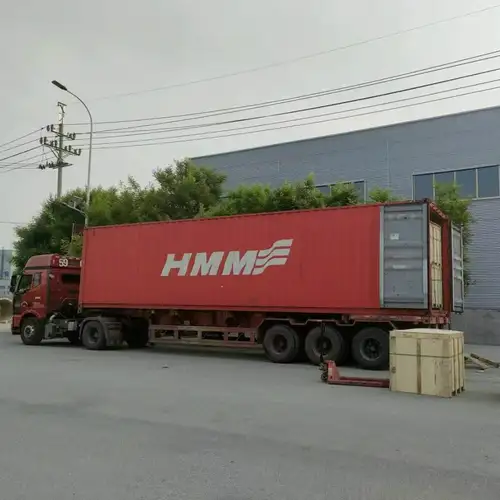
We coordinate export packing and shipment according to valve dimensions, order quantity, destination, and customer requirements. Please confirm packaging details, delivery schedules, shipping documents, and destination information with our team before order confirmation.

Application Examples
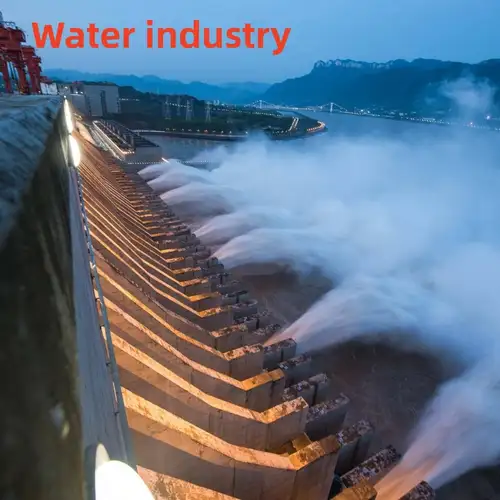
Municipal Water Networks
Used in suitable water distribution branches and pump systems where reverse flow needs to be controlled. The wafer design can help reduce installation space in existing or new pipework.
Commercial Buildings
Suitable for compatible water supply, HVAC, and building service circuits. Buyers should verify pressure class, water temperature, and the project's applicable standards before selecting the valve.
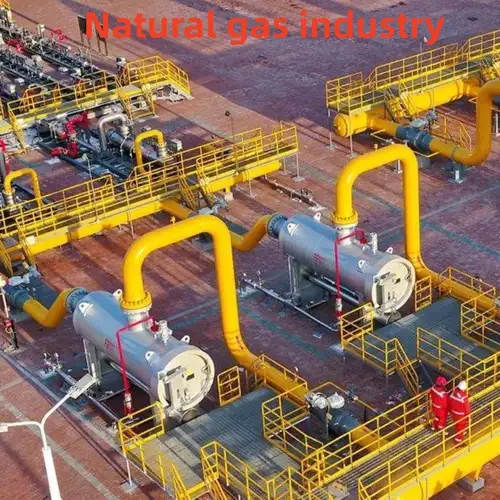
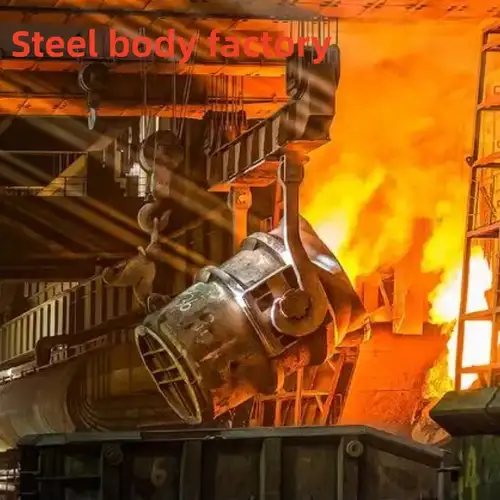
Industrial Cooling Systems
Used in suitable industrial circulation systems where automatic one-way flow control is required. The body, disc, and seal materials should be selected according to water chemistry and operating conditions.
Fire-Water Piping
May be used in fire-water systems when the selected valve meets project requirements. Confirm any required product approvals and the suitability of the selected model for the specified fire protection system.
Coastal Water Systems
For saline water applications, select corrosion-resistant materials based on chloride levels and exposure conditions. Material suitability should be confirmed for the complete valve assembly, not only the body.



Support from Selection to Delivery
Technical Consultation
We help customers review nominal diameter, pressure rating, connection type, medium, temperature, and material requirements. Product drawings and technical details can be provided according to the selected configuration.
Order and Quality Documentation
Inspection records, material documents, and other technical paperwork can be discussed according to the order specification and project requirements. Please confirm required documents before production or shipment.
After-Sales Assistance
We provide technical communication for installation, operation, maintenance, and replacement-part inquiries. Warranty coverage, spare-part availability, and response arrangements should be confirmed in the quotation or sales contract.
Frequently Asked Questions
What is the difference between a dual-disc check valve and a swing check valve?
A dual-disc check valve uses two spring-assisted discs and a compact wafer body, while a swing check valve generally uses a hinged disc. The wafer design can save installation space, but the best choice depends on flow conditions, pressure loss, maintenance access, and the risk of water hammer.
Can this valve be used for vertical pipework?
The butterfly type check valve may be suitable for vertical pipelines with upward flow if the specific model's installation instructions permit it. The flow arrow and installation orientation must be followed. Confirm the requirements with us before using it in a vertical line.
Which details are needed for a project quotation?
Please provide the nominal diameter, pressure rating, fluid type, operating temperature, connection standard, installation orientation, quantity, and destination. For corrosive fluids or media containing solids, include the fluid composition and relevant operating details.
Does the standard valve eliminate water hammer?
No. The standard spring-assisted design helps control reverse flow, but it is not a guaranteed water-hammer elimination device. Pump characteristics, flow velocity, pipeline length, elevation, and closure timing all affect transient pressure. A system assessment may identify the need for a slow-closing valve or other surge protection.
Can the valve handle oil or chemically aggressive fluids?
Suitability depends on the fluid and the selected materials. NBR may be appropriate for certain oil services, while other seals or body materials may be required for selected chemicals. We recommend checking compatibility before ordering rather than assuming that one material suits all oils or chemicals.
Request Product Details
If you are sourcing a check valve for a water supply network, HVAC system, industrial circulation line, or another application, contact Liangfa with your operating conditions and project requirements. We can help review the available configuration, material options, pressure class, and installation requirements before you place an order.
Related Category
Send Inquiry
Contact Info
-
Address
No. 2 Taikang Road, Xiditou Town, Beichen District, Tianjin City, China
-
Tel
-
Email
If you have any inquiry about a quotation or cooperation, please feel free to email or use the following inquiry form. Our sales representative will contact you within 24 hours.
News Recommendations