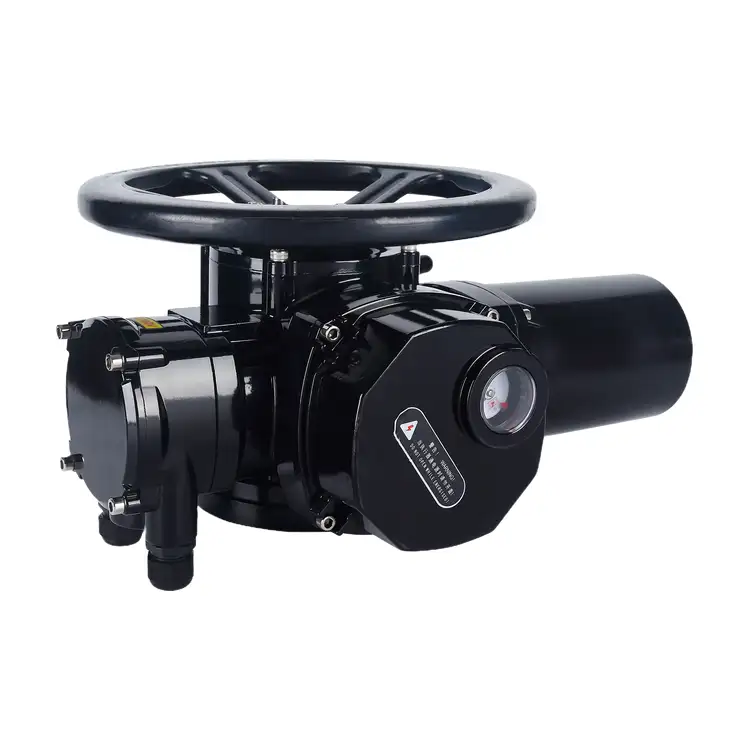
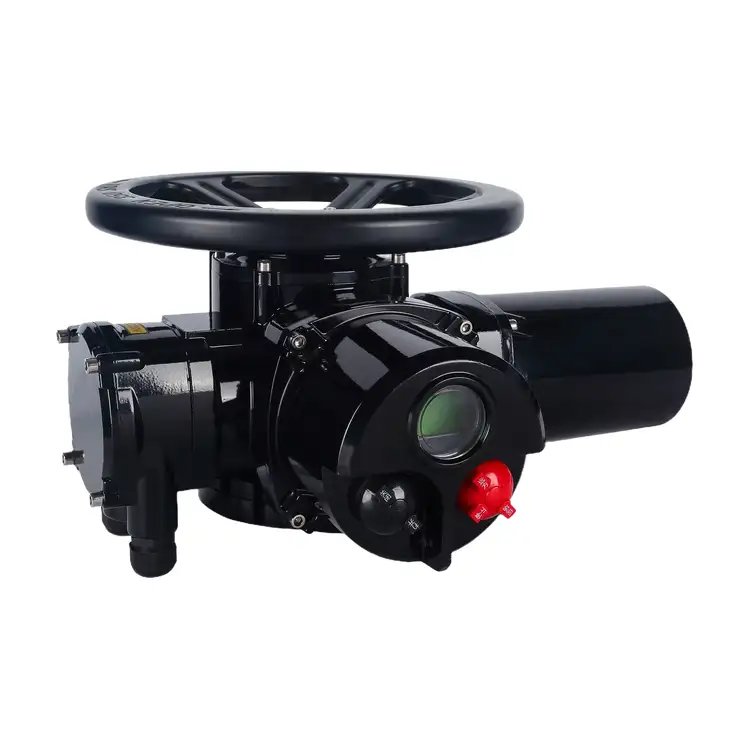
On-off Multi-turn Electric Actuator
Liangfa's On-off Multi-turn Electric Actuator is designed for reliable opening and closing of gate valves, globe valves, and other compatible multi-turn valves in water treatment, sewage, power generation, heating, and industrial pipeline systems. With output torque ranging from 10 to 2500 N·m, ISO5210 mounting options, and AC380V three-phase power as standard, it supports flexible configuration for different valve and site requirements.
Liangfa supplies reliable electric actuators for industrial valves that require clear open-and-close operation rather than continuous flow adjustment. Our On-off Multi-turn Electric Actuator is designed for gate valves, globe valves, and other compatible multi-turn valves used in water treatment, sewage systems, power plants, heating networks, and industrial pipelines.
With output torque from 10 N·m to 2500 N·m, ISO5210 mounting options, and multiple power and protection configurations, we help customers select a suitable drive according to valve torque, stem travel, control requirements, and site conditions. As a high-tech enterprise, Liangfa provides technical selection support for different industrial projects.
How the Actuator Controls Valve Movement
The On-off Multi-turn Electric Actuator is designed for two-position operation: fully open or fully closed. It is suitable for pipeline isolation where the valve normally remains in one position and operates when the process requires flow to start or stop. It does not provide continuous modulating control and should not be selected for applications that require a sustained 4–20 mA positioning signal.
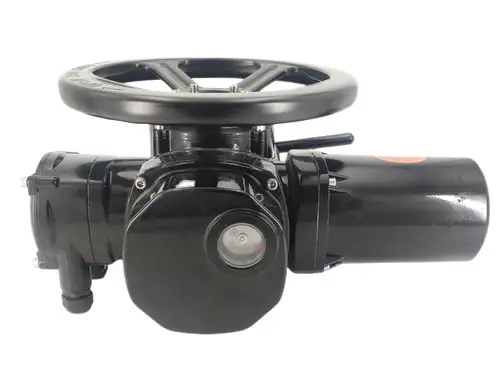
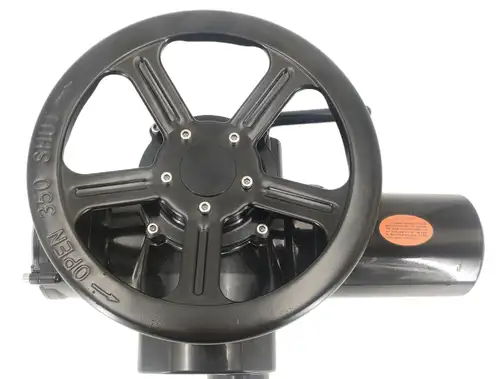
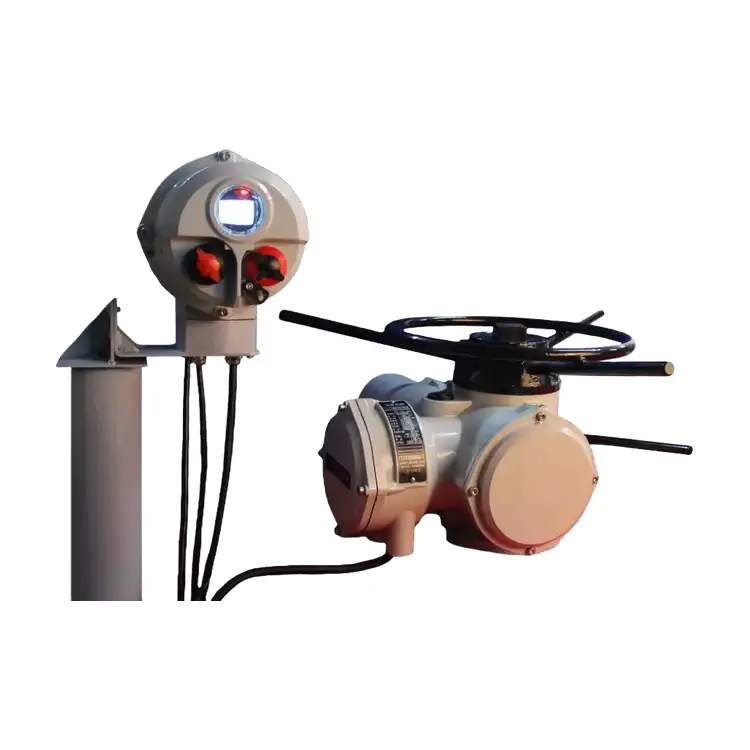
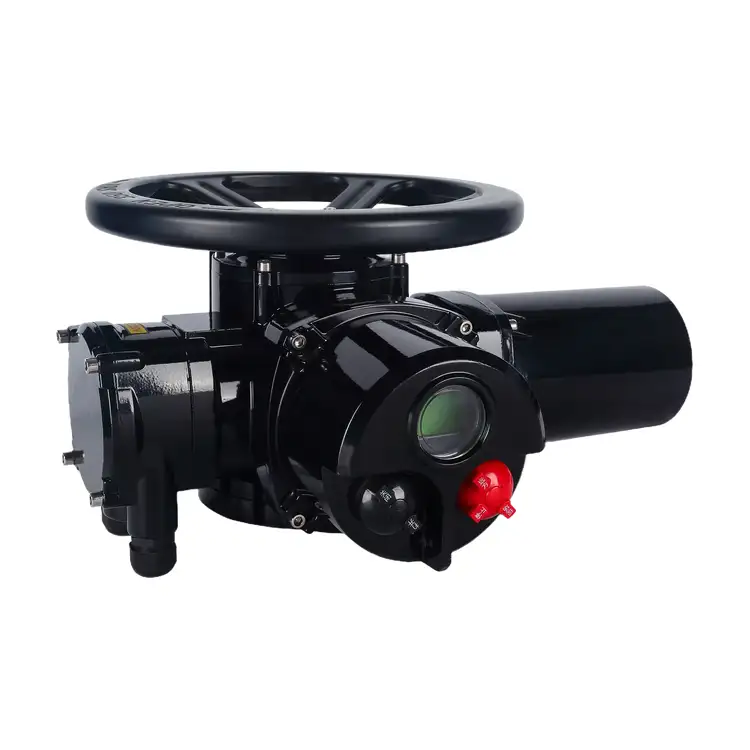
A motor drives a multi-stage gear transmission and worm-and-wheel reduction mechanism to convert motor rotation into the torque required to operate the valve. The self-locking transmission helps maintain the valve position when the motor stops, subject to the valve and actuator configuration. A manual-electric clutch and handwheel allow manual operation when electrical power is unavailable, provided the equipment is isolated and operated according to the instructions.
The actuator uses travel-limit and over-torque protection to stop operation at configured end positions or when excessive resistance is detected. Integrated models can include contactors and electrical protection functions, while split-type models use an external control cabinet. The appropriate configuration depends on the project control system and wiring design.
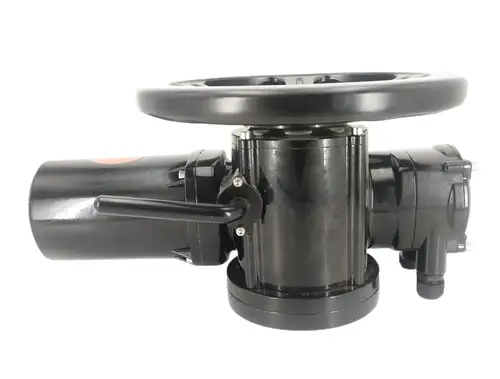
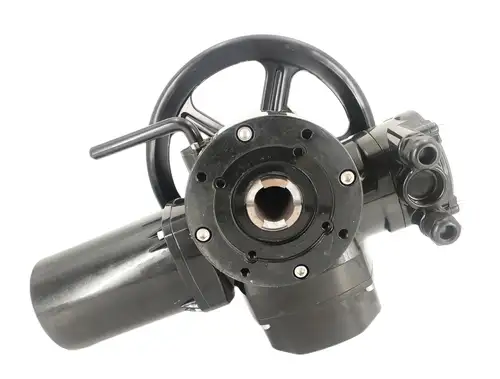
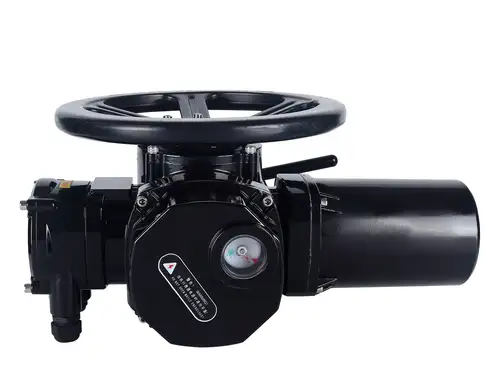
Key Specifications and Configuration Options
We offer different configurations to match valve dimensions, torque requirements, power availability, and the operating environment. Please confirm the final specification against the selected model's datasheet before ordering.
| Parameter | Specification |
| Product type | On-off multi-turn electric actuator |
| Applicable standard | JB/T 8528; ISO5210 stem connection |
| Output torque | 10–2500 N·m; higher torque available with an auxiliary gearbox where applicable |
| Mounting flange | F07, F10, F14, F16, F25 options, subject to model compatibility |
| Power supply | AC380V, three-phase, 50Hz standard; AC220V, single-phase optional on compatible models |
| Enclosure protection | IP55 standard; IP65 or IP67 optional on compatible models |
| Ambient temperature | -20°C to +60°C standard; -40°C low-temperature or +80°C high-temperature configurations available by customization |
| Control configuration | Split type with external control cabinet or integrated on-off type |
| Feedback | Open, close, and over-torque contacts according to configuration; potentiometer, encoder, or Modbus RTU may be optional |
| Hazardous-area option | Ex d IIB T4/T6 versions available for applicable models; verify the exact certificate and site classification |
Choose Torque Before Choosing the Model
The correct output torque is one of the most important factors when selecting an actuator. A valve's nominal diameter alone does not determine its operating torque. Seat design, pressure difference, packing friction, medium deposits, corrosion, and time in service can all affect the force required to open or close it.
Use the Valve Manufacturer's Torque Data
We recommend starting with the valve manufacturer's maximum operating torque and the required stem rotations from fully closed to fully open. The actuator's rated torque should provide an appropriate margin above the maximum expected valve torque. A preliminary safety factor of 1.5–2.0 may be considered during selection, but the final margin should follow the valve manufacturer's guidance, operating conditions, and project requirements.
For sewage, sediment-containing media, or valves prone to scaling, additional torque margin may be necessary. Excessive torque is not a substitute for correct sizing: it can damage the valve stem, transmission, or seating components. The torque and travel switches must be configured to protect the valve while allowing it to complete its intended stroke.
Check Stem Travel and Output Speed
Confirm the total number of stem rotations, stem diameter, thread or keyway dimensions, and whether the valve has a rising or non-rising stem. Output speed affects the time needed to complete a stroke. For a valve with a known number of rotations, the approximate travel time can be estimated by dividing the required rotations by the actuator output speed. Actual operating time also depends on the selected model and valve load.
For large gate valves, a suitable lower output speed can help reduce mechanical impact. Where a specific shut-off time is required, confirm the allowable closing speed and water-hammer risk with the system designer before choosing a faster configuration.
Match the Control Unit to the Site System
Liangfa offers split and integrated control arrangements for different installation and automation requirements. Choosing the correct type early helps reduce wiring changes and commissioning delays.
| Configuration | How It Works | Typical Use |
| Split type | The actuator motor unit is operated through an external control cabinet. | Power plants and projects with centralized control panels or established motor-control systems. |
| Integrated on-off type | Built-in control components accept compatible open/close commands and provide configured status or fault contacts. | Field installations using PLC or DCS dry-contact commands. |
The On-off Multi-turn Electric Actuator can provide passive-contact feedback for open, closed, and over-torque status according to its configuration. Optional position indication or bus communication must be confirmed for the selected model. A potentiometer or encoder used for position indication does not automatically make an on-off actuator suitable for continuous 4–20 mA modulation.
Before ordering, confirm the supply voltage and phase, control wiring, contact rating, feedback requirements, and whether the project needs a local control cabinet. For three-phase units, phase-sequence requirements should be checked during commissioning. Integrated electrical protection features can vary by model, so please verify them against the wiring diagram and technical datasheet.
Protection for Outdoor and Industrial Locations
The standard enclosure is IP55, with IP65 and IP67 options available on compatible models. The required rating depends on the actual exposure to rain, splashing water, dust, washdown, and humidity. Cable glands, covers, seals, and installation practices must also maintain the intended protection level.
Temperature and Condensation
The standard ambient operating range is -20°C to +60°C. Customized versions can be considered for ambient temperatures down to -40°C or up to +80°C. These limits refer to the actuator's surrounding environment, not the temperature of the process medium inside the valve. When installing the actuator near hot pipelines, assess radiant heat and provide suitable spacing or thermal shielding where needed.
Outdoor equipment exposed to large day-night temperature changes may experience internal condensation. An optional anti-condensation heater can help manage moisture when specified for the model. For cold-region installations, confirm the suitability of lubrication, cables, seals, and electrical components for the expected minimum temperature.
Explosion-Proof Requirements
Explosion-proof versions with Ex d IIB T4 or T6 markings are available for applicable configurations. The exact certification, gas group, temperature class, equipment protection level, and permitted hazardous zone must match the site's classification. Do not assume that every version is suitable for every explosive atmosphere. Installation and maintenance must follow the certificate, applicable regulations, and the manufacturer's instructions.
Performance in Common Valve Isolation Duties
Water Supply and Sewage Treatment
Waterworks, filter systems, pump stations, and sewage plants commonly use multi-turn actuators to operate gate valves and other compatible isolation valves. In sediment-containing or sludge-prone service, valve resistance can increase after long periods without movement. We recommend selecting adequate torque margin and a suitable enclosure rating, with periodic functional checks to identify sticking valves or moisture ingress.
Heating and Power Generation
Heating networks and power plants use electric actuators for isolation in circulating-water, condensate, demineralized-water, and auxiliary pipeline systems. Where hot pipelines are present, installation distance and radiant heat should be assessed against the actuator's ambient temperature limit. For standby valves, scheduled operation tests can help reveal increased breakaway torque before an emergency demand.
Petrochemical and Metallurgical Facilities
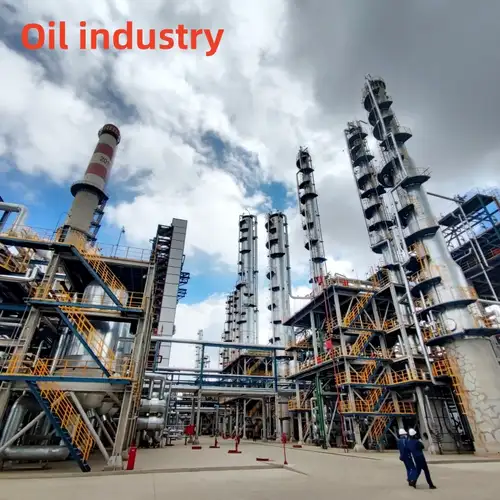
In industrial process lines, actuators can support remote opening and closing through compatible control cabinets, PLCs, or DCS systems. For classified hazardous areas, specify the certified explosion-proof version and approved cable-entry accessories. In corrosive atmospheres, consider the coating, fasteners, cable seals, and maintenance plan as part of the complete installation rather than relying on enclosure rating alone.
Water Conservancy and Mining
Water conservancy facilities, irrigation systems, mine drainage, and tailings pipelines may use multi-turn actuators where valve design and stem travel are compatible. For large valves, verify torque, total rotations, output speed, and the space required for rising-stem movement. An auxiliary gearbox may be needed when the required torque exceeds the actuator's direct output range.
Installation Checks That Prevent Avoidable Downtime
Correct installation and commissioning are essential to safe valve operation. Before mounting the actuator, verify that the valve can be operated manually without abnormal binding and that the mounting flange, stem dimensions, keyway, and coupling match the selected actuator.
- Confirm the actuator model, rated torque, power supply, mounting flange, and protection configuration against the approved datasheet.
- For rising-stem valves, reserve sufficient axial clearance throughout the full stroke.
- Align the actuator and valve coupling without forcing the stem or placing unnecessary side loads on the connection.
- Disconnect power before wiring, and follow the approved wiring diagram and local electrical requirements.
- Check protective earthing, terminal tightness, cable-entry sealing, and the integrity of all covers before energizing the unit.
- Set travel limits and torque protection according to the model's commissioning instructions; do not simply set torque to its maximum value.
- Test opening and closing direction, end-position stopping, feedback contacts, and fault indications before putting the valve into service.
Installation, wiring, insulation testing, and commissioning should be performed by qualified personnel. For explosion-proof equipment, maintenance must preserve the certified flameproof joints and sealing arrangements. Never open a hazardous-area enclosure while it is energized or while an explosive atmosphere is present.
Maintenance and Fault Prevention
A practical maintenance plan helps maintain dependable operation, especially for valves that remain stationary for long periods. The inspection interval should reflect the service environment, valve criticality, operating frequency, and the manufacturer's instructions.
- Routine inspection: Check the housing, seals, cable entries, corrosion, unusual noise, and consistency between local valve status and control-room feedback.
- Functional testing: Where process conditions permit, perform a controlled open-close test to confirm travel limits and feedback signals.
- Electrical checks: Inspect terminals and protective devices according to the approved maintenance procedure, with power isolated before work.
- Mechanical checks: Inspect mounting bolts, coupling components, handwheel operation, and lubrication at the intervals specified for the model.
- Fault diagnosis: If the actuator trips on over-torque, investigate valve jamming, deposits, stem misalignment, and torque settings before increasing the torque threshold.
If electric operation fails but manual operation remains possible, check the power supply, phase condition, control circuit, and contactor according to the wiring diagram. If the motor continues running beyond the intended end position, isolate power immediately and have qualified personnel inspect the travel-limit mechanism. Do not bypass protection devices to keep a faulty actuator operating.
Liangfa Manufacturing and Delivery
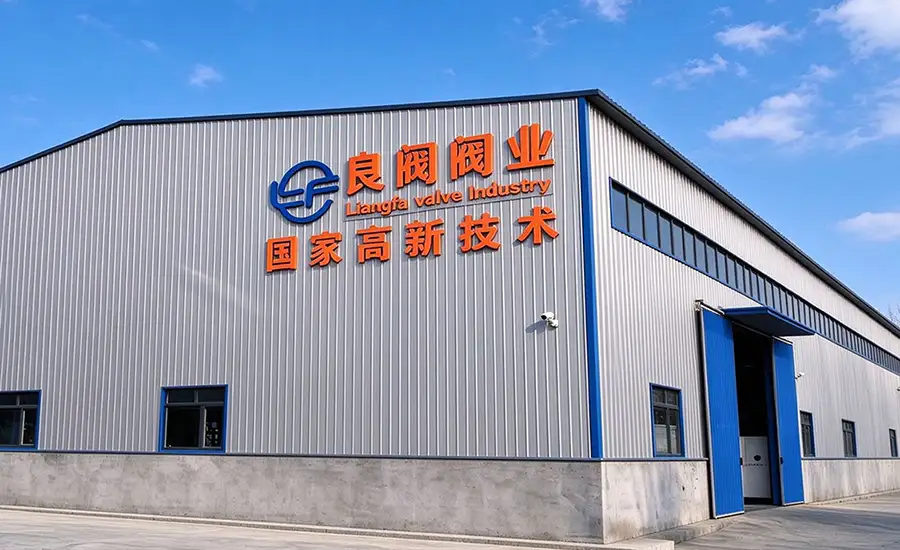
As a high-tech enterprise, Liangfa serves industrial customers with product selection support, configuration guidance, and manufacturing coordination. We can review valve data, torque requirements, mounting dimensions, power supply, control signals, and environmental conditions before recommending a suitable configuration.
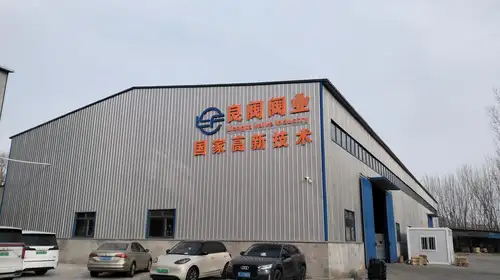
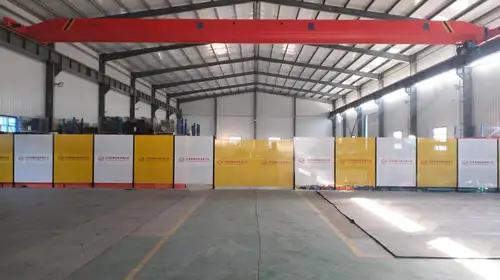
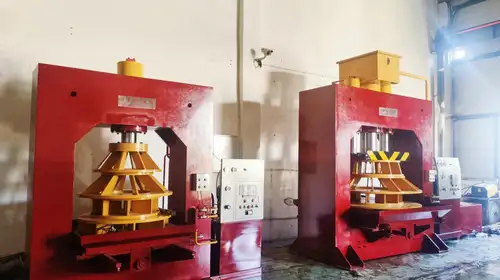
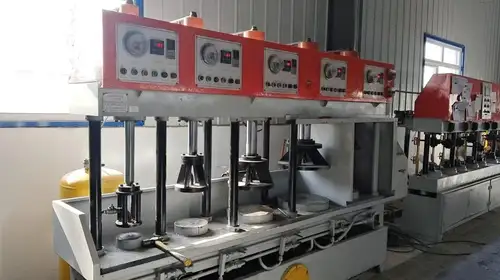
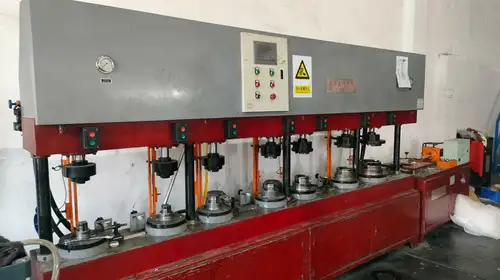
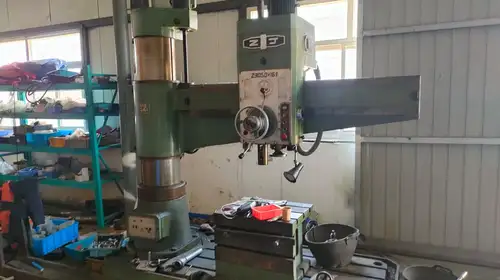
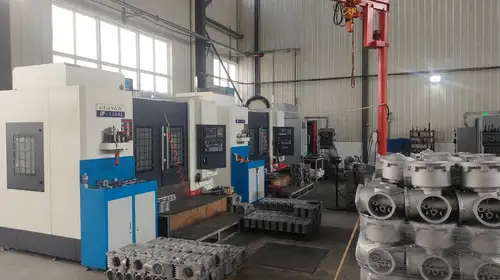
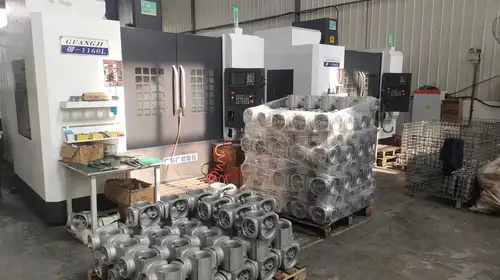
Factory Tour
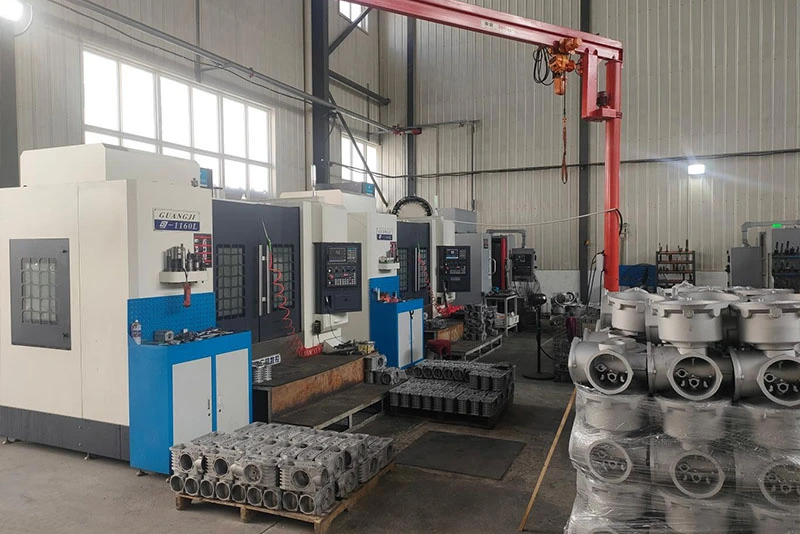
The following images show our factory and production-related facilities.
Product Packing and Shipping
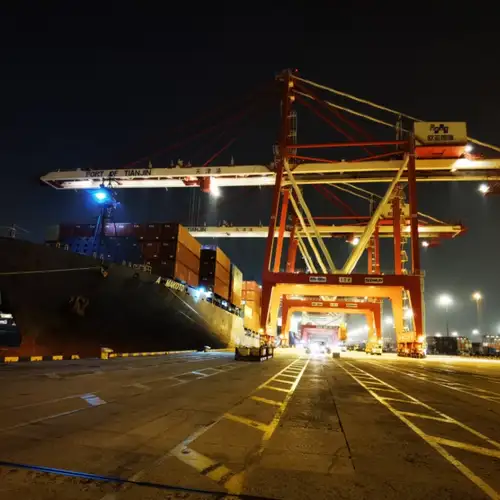
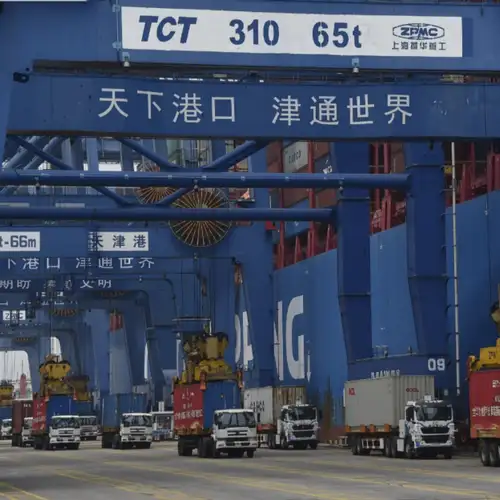
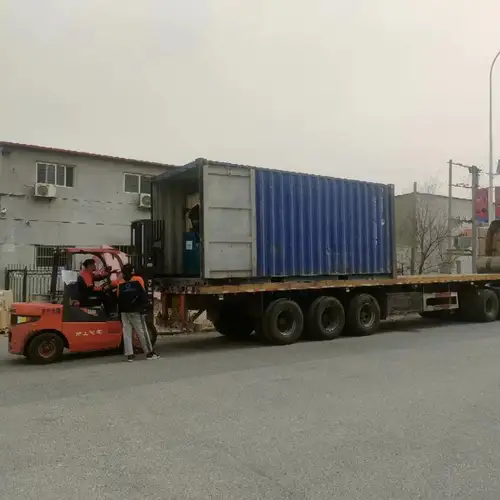
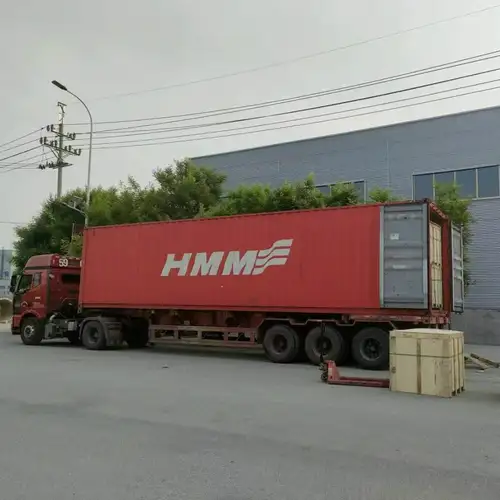
We arrange export packing and coordinate sea freight or land transport according to the order and destination. Packing details, shipping schedules, and export documents are confirmed during order processing.
Valve Applications
The On-off Multi-turn Electric Actuator is intended for compatible multi-turn valve duties across a range of industrial sectors, including:
- Municipal water and sewage: Inlet pipelines, filtration systems, pump stations, sedimentation systems, and sludge-discharge lines.
- Heating networks: Isolation valves in heat-exchanger stations, primary and secondary circuits, and distribution pump stations.
- Power generation: Auxiliary water systems, circulating water, condensate, and demineralized-water pipelines.
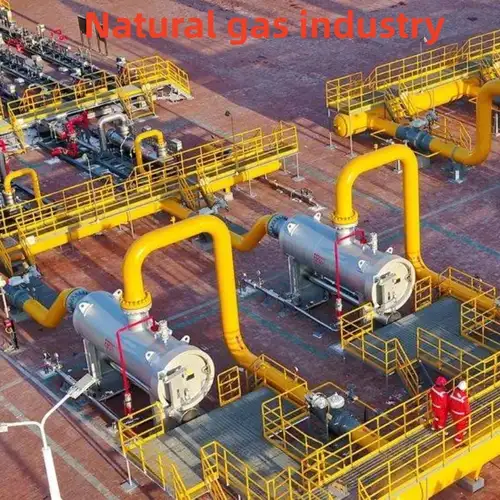
- Petrochemical facilities: Process isolation, venting, blowdown, and utility pipelines, with appropriately certified equipment in hazardous areas.
- Metallurgy: Circulating-water systems, dust-removal water, and auxiliary process lines.
- Mining: Mine drainage, fire-water systems, and compatible tailings-pipeline valves.
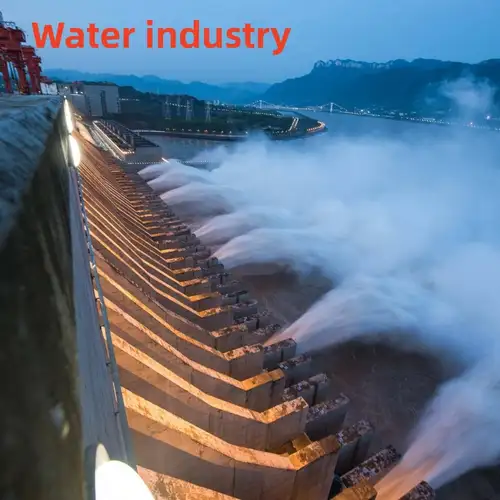
- Water conservancy and irrigation: Compatible sluice gates and other multi-turn operating mechanisms.



Technical Support and Order Service
Before Ordering
We provide technical consultation and selection guidance based on valve type, nominal diameter, pressure rating, operating torque, stem travel, power supply, control requirements, and installation environment. Drawings, technical parameters, configuration recommendations, and quotations can be provided for review. Custom options are subject to technical confirmation.
During Production and Delivery
We coordinate production progress, factory inspection arrangements, export packaging, and shipping documentation. Inspection reports and other technical documents are supplied according to the order requirements and the applicable product configuration.
After-Sales Assistance
Our team provides remote guidance for installation, operation, troubleshooting, and maintenance. Spare parts and replacement components can be discussed according to the model and availability. We aim to respond to quality-related feedback within 24 working hours. The stated warranty period is 12 months from the shipment date, subject to the sales agreement and warranty terms.
Frequently Asked Questions
Can this actuator regulate flow at a partially open position?
No. This is a two-position actuator designed for full-open and full-close operation. It is not intended for continuous modulation or sustained intermediate positioning. If your process requires continuous flow control through a 4–20 mA command, select a compatible modulating actuator instead.
Can it operate a butterfly valve or ball valve?
Not directly in a typical 90-degree quarter-turn arrangement. This product is designed for multi-turn valves such as compatible gate and globe valves. Butterfly and ball valves usually require a quarter-turn actuator or a suitable gearbox and mounting arrangement designed for that valve.
What information should I send for model selection?
Please provide the valve type and model, maximum operating torque, nominal diameter and pressure rating, stem diameter and thread or keyway details, total stem rotations, required operating time, supply voltage, control method, feedback requirements, and site temperature and protection requirements. Valve manufacturer data is preferred over selecting by nominal diameter alone.
Can the actuator be used in an explosive atmosphere?
An applicable explosion-proof version may be available with Ex d IIB T4 or T6 marking. Before ordering, confirm the exact certificate, gas group, temperature class, hazardous-area classification, and cable-entry requirements with our team. The selected model must be suitable for the actual site conditions.
What happens if the valve becomes stuck?
The configured over-torque protection is intended to stop the actuator when excessive resistance is detected. If the actuator trips before completing its stroke, inspect the valve for deposits, corrosion, mechanical obstruction, or stem misalignment. Do not repeatedly restart the actuator or raise the torque setting without identifying the cause.
What is the standard warranty period?
The stated warranty period is 12 months from the shipment date, subject to the terms of the sales agreement. Please contact us with the model, order information, and fault description if technical support is required.
To help us recommend the right configuration, send Liangfa your valve datasheet, required torque, stem rotations, power supply, control method, and site conditions. We can then review the mounting interface, protection options, and operating requirements before confirming a model.
Related Category
Send Inquiry
Contact Info
-
Address
No. 2 Taikang Road, Xiditou Town, Beichen District, Tianjin City, China
-
Tel
-
Email
If you have any inquiry about a quotation or cooperation, please feel free to email or use the following inquiry form. Our sales representative will contact you within 24 hours.
News Recommendations